
why is coffee called joe
The question asks why Americans say “cup of joe” and what the evidence actually shows. We will trace the record and explain why the answer rests on dated citations and timelines rather than a single neat story.
Printed uses of the term cluster in the 1920s–1940s, though spoken use may be older. Good evidence for slang means dated print citations, dictionary entries, and usage notes rather than later retellings.
This introduction sets expectations. The article will review newspapers, dictionaries, diner and military slang, and then weigh leading origin theories: the Navy link to Secretary Josephus Daniels, shortening from “jamoke,” the “average Joe” idea, and a brand-linked account tied to a figure named Joe Martinson.
We also note contrast with “java,” which links to a place. Nicknames often arise because everyday drinks gain short names that signal routine and familiarity. That pattern helps explain how one term can split into multiple competing origins.
Where “cup of joe” shows up in history and American slang

Tracing printed examples helps pin down when everyday slang slipped into national use. Historians and lexicographers favor dated citations over entertaining but unverified tales.
One early printed clue appears in a 1927 Virginia newspaper that quoted U.S. Navy slanguage, noting that coffee was called “joe.” That line matters because it ties the word to military speech and gives a fixed date.
The 1930s show growing print visibility. By the mid-1930s one source reports a book example from 1936, and the Oxford English Dictionary records a 1941 citation from Jay Smiley’s Hash House Lingo.
- Paper trail: dated print anchors claims about slang and tracks change over time.
- Navy note (1927): an early printed instance linking the word to sailor talk.
- 1930s–1940s: more printed uses make the cup term common in books and papers.
Smiley’s book points to diner and hash-house culture, where plain coffee became shared shorthand. Such counters and barracks helped the words standardize before editors captured them.
Oral circulation explains gaps between use and print. Working people and servicemen often spoke slang for years before it reached newspapers and dictionaries. That gap matters today when we weigh which origin story best fits the evidence.
why is coffee called joe: the leading origin theories
Different strands—naval practice, slang blends, brands, and common usage—might all have nudged this familiar phrase into place.
The Navy link: Josephus Daniels and General Order 99
In 1914 Secretary of the Navy Josephus Daniels issued General Order 99 that banned alcohol on U.S. ships. With spirits off the mess table, hot brew became the strongest drink sailors could get.
This theory gains strength from that clear policy change and sailor culture. Its main weakness is the gap: print examples appear in the 1920s–1930s, not immediately after 1914.
Does the timeline fit?
Spoken slang often takes years to reach print. Wartime shifts and Prohibition may have dimmed, then revived, naval nicknames, explaining the delayed citations in newspapers and books.
Linguistic route: from “jamoke” to a shortened version
“Jamoke,” a 1930s blend of java and mocha, likely shortened in casual talk. Shortening long slang into a punchy word is common in American speech and fits how everyday talk trims phrases.
Place names, common-man use, and brands
Java and mocha began as place-name terms that stuck in American vocabulary, even though imports later came from different regions. The “average man” sense of Joe makes a plain cup feel ordinary and relatable.
Martinson Coffee, started by Joe Martinson, trademarked a related phrase. That shows local branding could spread a nickname, though it does not prove national origin on its own.
| Theory | Best support | Main weakness |
|---|---|---|
| Navy (Josephus Daniels) | 1914 alcohol ban; sailors relied on hot brew | Print evidence lags by a decade or more |
| Linguistic (jamoke → short form) | Known 1930s slang blend; common shortening pattern | Jamoke citations postdate some early uses |
| Average-man label | “Joe” long meant common man; fits everyday drink | Explains sense but not a single start point |
| Brand (Joe Martinson) | Trademark and local reach; cultural artifacts exist | Local brand use may not equal national slang |
In short, no single origin dominates. The strongest explanation treats multiple theories as parts of the story—naval habits, diner speech, linguistic shortening, and brand names all helped the phrase spread.
For a deeper look at early citations and retellings, see the cup of joe origin article.
How sailors, diners, and everyday people helped “joe” stick
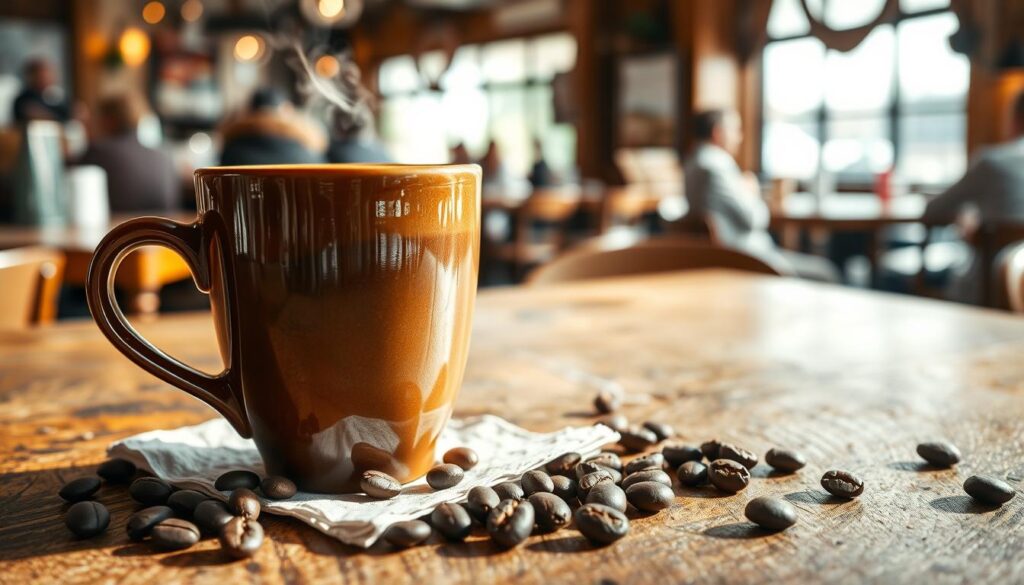
Terse slang often spreads where crowds gather, and sailors and diner regulars offered two ideal channels.
Military life and World War II as a boost
Service life bundles people from many regions into shared routines. Mess halls, long watches, and daily chatter made short, memorable words easy to adopt.
World War II amplified that effect. Troops moved across states and overseas, carried speech home, and kept terms alive for years after service.
Hash houses and diner culture
Counter culture made fast ordering essential. Jay Smiley’s Hash House Lingo shows how plain drinks gained quick names at diners and hash houses.
“Cup of joe” served as a fast way to ask for regular, no-frills coffee rather than specialty espresso drinks.
- High-contact settings repeat terms daily until they feel normal.
- Shared routines create strong cues for copying short words.
- Veterans and regulars act as carriers, spreading a term across regions.
| Channel | How it spread | Result |
|---|---|---|
| Military mess halls | Daily use among mixed groups | Rapid regional transfer during wartime |
| Diners and hash houses | Quick shorthand for common orders | Term became ordinary in public life |
| Civilian carryover | Returned service members and workers | Sustained use across decades |
In short, repetition in high-contact places locked the term into daily speech. That spread story is easier to document than a single inventor and helps explain how local talk became national usage.
What “a cup of joe” means today and why the mystery still matters
In modern speech, a “cup of joe” names a plain, everyday mug rather than a specialty order.
That usage grew in popularity after mid-20th century and became especially familiar by the 1980s. Today the phrase signals a straightforward, familiar coffee served at diners, offices, or home pots.
Printed evidence points to Navy and diner slang in the late 1920s and wider visibility in the 1930s–1940s, with dictionary entries recording those citations. No single origin wins; the Navy link, a shortening from jamoke, the average-man nickname, and local brands each shed light on the term.
Usage note: calling for a cup this way tells servers you want plain, no-frills coffee. The uncertain origin itself shows how spoken words spread before print, and that staying power matters more than a tidy origin story.


