what is turkish coffee
Nearly every guide starts with a simple idea: this is a brewing method, not a single bean. In small, roughly 2-ounce cups you get a bold, espresso-like sip that is unfiltered and lets grounds settle at the bottom.
Read on to learn what makes this cup different and how to brew it at home on a standard U.S. stovetop. Expect a foamy top and a thicker texture. Portions are small, so the focus is on aroma and ritual more than a quick boost.
The technique is simple and forgiving. Households vary on heat, sweetness, and timing, but the core steps remain the same. This intro previews gear, ingredient choices, and a step-by-step method that emphasizes low heat, careful timing, and a steady pour to get reliable foam.
Tip: let grounds settle, sip slowly, and stop before the last sludgy layer. The piece that follows covers troubleshooting for foam, bitterness, and gritty texture across gas and electric stoves.
What Is Turkish Coffee and Why It’s Different
This brew names a preparation method rather than a bean origin. It relies on ultra-finely ground coffee heated gently with water — often with sugar — in a small pot called a cezve until a creamy foam rises just below boiling.
A preparation method, not a type
The style accepts any roast or origin so long as the grind and technique match. Precision comes from grind size and slow heating, not pressure.
Unfiltered brew and settled grounds
Fine particles and natural oils remain in the cup, creating a thicker mouthfeel and lingering finish. After brewing, grounds sink and settle to the bottom cup layer, so you sip the clear liquid above and leave sediment behind.
Small cups, espresso-like intensity
The result pours into 2-ounce cups and delivers rich, bold flavor like espresso in strength but without pressure extraction. Foam matters: it shows careful technique and gives a silky top that enhances aroma and texture.
- Finely ground coffee—closer to flour—drives quick extraction.
- Served small for slow sipping and focus on aroma.
- Taste often runs earthy and aromatic; sweetness can be added during brewing.
Where Turkish Coffee Comes From: History, Culture, and Ritual
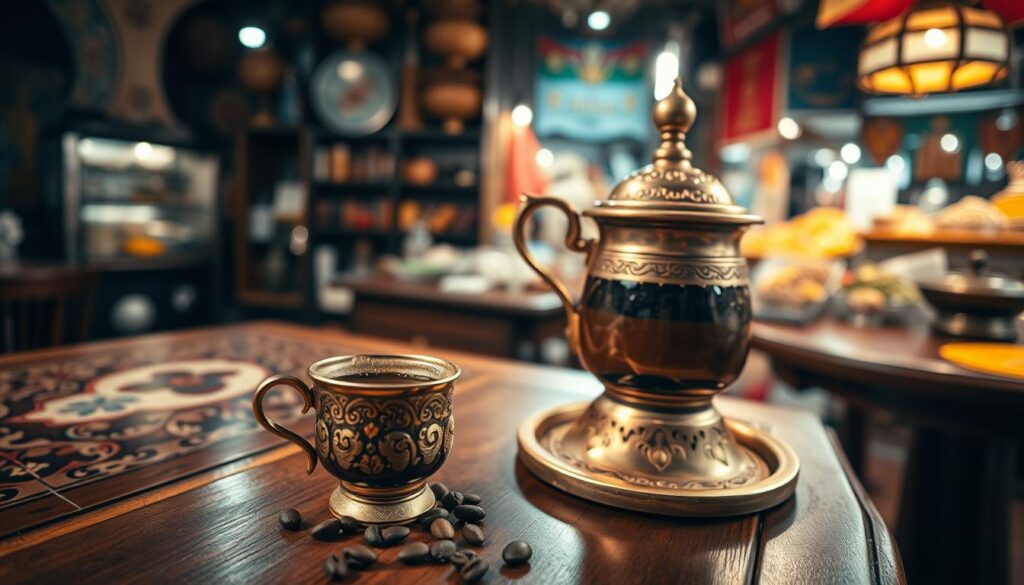
A single cup holds centuries of ritual and social life that began in the Ottoman courts.
The drink took root in the 16th century, when Istanbul’s first kahvehane opened in 1554. Those coffeehouses became hubs for conversation, games, and debate. They shaped public life and helped spread the tradition across the Middle Eastern world.
Spread across regions and Europe
Merchants and diplomats carried this brew to ports and palaces. Venice opened its first house in 1645, showing how the style influenced European coffee culture and later cup rituals.
Living heritage and social uses
UNESCO added the practice to its Intangible Cultural Heritage list in 2013, recognizing a living tradition that links generations and neighborhoods.
- Fortune telling (kahve falı): invert the cup on the saucer so grounds form patterns readers interpret for fun.
- Serving etiquette: offer a small glass of water and a sweet like Turkish delight; ask about sweetness before brewing.
- Family and guests: the small cup slows conversation and emphasizes hospitality.
| Element | Origin | Social Role | Modern Practice |
|---|---|---|---|
| Kahvehane | Ottoman Empire (1554) | Debate, games, news | Community meeting spots |
| European spread | Venice (1645) | Cultural exchange | Adapted coffeehouses |
| UNESCO | 2013 inscription | Preservation of ritual | Continued family practice |
What You Need to Make Turkish Coffee at Home
Small, responsive equipment matters more than brand names for a proper brew. The vessel you use controls heat, foam, and pour, so choose a cezve or a small pot that lets you work slowly and precisely.
Cezve (ibrik) versus a small pot: what matters most
A cezve (often copper) has a narrow top that helps foam collect and a long handle to lift off heat fast. That shape makes foamy peaks easier to catch.
A small saucepan or similar pot works as an alternative in the US, but expect less reliable foam. Watch the rise closely and control low heat carefully. For a practical guide, try the saucepan option linked as a handy reference: saucepan option.
The right cup and choosing coffee
Serve in demitasse or fincan-style cups (about 2 oz). Small cups keep temperature and tradition intact and show foam best.
Use pre-ground Turkish coffee when possible; the grind must be powder-fine. Many home grinders cannot reach that texture, so buying ground saves trial and error. If you grind at home, use equipment rated for a flourlike grind to protect aroma, foam, and texture.
Ingredients and Flavor Options That Define the Cup
Ingredients set the tone: small changes in ratios and spices shape every cup. Start with three basics: finely ground coffee, cold filtered water, and any sugar you choose before heating.
Grind and water ratios for a thick, aromatic result
Use powder-fine ground coffee measured to cup volume. A good baseline for U.S. kitchens: one demitasse (2 oz) of water per serving with about one heaped teaspoon of ground coffee. Scale the mixture by cup count to keep thickness steady.
Choose sweetness before the pot heats
Add sugar to the pot so it dissolves while heating. Do this before the brew reaches simmer; you won’t stir after pouring because stirring breaks foam and stirs up sediment.
- Unsweetened: no sugar, brighter bitterness.
- Medium sweet: 1 teaspoon per cup for balance.
- Very sweet: 2 teaspoons or more per cup for syrupy mouthfeel.
Cardamom and spice variations
Add a light pinch of ground cardamom to the coffee before mixing for a warm, floral note commonly found in Middle Eastern practice. Cinnamon or a tiny clove work as authentic variations, but cardamom remains the classic choice.
Remember: more coffee and a finer grind increase thickness. More sugar softens perceived bitterness and alters mouthfeel. Treat these ratios as a starting part of your ritual and adjust gradually to match household taste.
How to Make Turkish Coffee: Stovetop Method With Foam
Start by measuring cold water into your cezve so ratios stay consistent. Add the finely ground coffee and sugar, then stir just once to combine before any heat touches the metal.
Place the cezve on low heat and keep the flame gentle. Heat slowly so foam forms and climbs toward the top without a rolling boil. Watch closely and lift the cezve off the heat just before it boils over.
Pour a small amount into each cup to share the foam evenly, then return the cezve to the burner. Repeat the gentle rise and pour one or two more times to deepen aroma and fill cups while preserving foam on the surface.
After the final pour, let cups rest for a couple of minutes so the grounds settle to the bottom. Sip slowly, enjoy the foamy top, and stop before you reach the last gritty layer.
Troubleshooting and Pro Tips for Better Foam, Flavor, and Texture

Small adjustments at the stove make the biggest difference in foam, flavor, and mouthfeel.
Start low and watch closely. Pull the cezve off the burner as foam nears the rim. A hard boil kills foam and pulls out bitter notes.
Why foam fails and how to fix it
Failing foam usually means too much heat, stirring on the flame, or a grind that’s too coarse. Reduce burner power and avoid stirring once heating begins.
- Use a smaller pot for small batches.
- Start with cold water for gentler rise and better control.
- Pull the pot when foam swells, then pour to share foam across cups.
Grind, water choice, and stovetop tips
The grind should be flourlike, finer than espresso; sandlike particles will taste thin and gritty.
Cold water gives more ramp time and control; hot water speeds service but tightens timing.
Gas reacts fast — drop flame early. Electric holds heat, so lift the pot sooner and move it off the element to stop extraction.
Prevent bitterness and settle the grounds
Avoid prolonged cooking and aggressive bubbling. Let cups rest so grounds sink, pour gently, and stop before the sediment layer.
After you learn the cues, brew with your heart: small feel-based tweaks make this part of the ritual.
A Stronger Sip, a Slower Moment: Enjoying Turkish Coffee the Traditional Way
Pause, pour, and let a small cup slow the room for a few quiet minutes.
Serve in demitasse-sized cups with a glass of water and a small sweet—Turkish delight, dates, or a bite of chocolate work well. Ask guests about sugar before you brew and pour while foam still crowns each cup.
Sip the water first to clear the palate, then drink slowly and leave the grounds undisturbed. Stop before the last muddy sip; sediment is part of the unfiltered style and not meant to be swallowed.
For a playful finish, turn the cup onto the saucer for kahve falı and read the patterns together. Once you master foam and timing, this simple ritual becomes an easy, repeatable way to host and connect.