is matcha better than coffee
This quick introduction frames a common U.S. question: how do a stone‑ground green tea powder and a brewed cup compare for daily use? The choice often comes down to caffeine effects, mood, taste, and routine.
Matcha delivers its whole‑leaf nutrients and L‑theanine for a calm, focused feel. A typical serving has about 70mg of caffeine, while a standard 8oz cup of coffee often runs higher and varies by roast and dose.
People report coffee feels fast and sharp, with possible jitters or a crash. Many find matcha smoother and longer lasting. Both drinks offer antioxidants and polyphenols; matcha highlights catechins like EGCG, and brewed coffee adds beneficial compounds plus vitamin B2 and magnesium.
This article is informational, not medical advice. Individual tolerance—sleep, anxiety, heart rate, and blood pressure—matters. Ahead we’ll move from a quick answer into deeper comparisons: caffeine content, daily effects, antioxidants, oral health, metabolism, and practical switching tips.
Matcha vs. coffee at a glance: what most people want to know
Deciding on a daily drink often comes down to energy type, taste, and routine. This quick snapshot helps you pick a cup that suits work, workouts, or calm focus.
Typical caffeine content per 8oz: matcha ~70mg and a regular cup coffee ~95mg. Keep in mind that “a cup” covers many brew sizes and strengths, so treat these as ranges.
- Pick matcha if you want calmer focus and fewer jitters; pick coffee for a stronger, faster hit and roast flavor.
- Caffeine levels depend on dose: grams of powder or beans matter more than the label.
- Daily effects people notice: energy boost, sustained focus, mood shifts, digestion sensitivity, and sleep impact later in the day.
- Convenience: whisk-and-drink for tea; coffee can be instant, drip, or espresso—equipment changes the prep time.
- Top benefits readers ask about: antioxidants, metabolism support, and oral hygiene (staining and breath differences).
This section sets up deeper dives ahead so you can weigh what matters most for your body and routine.
What matcha is and how it’s different from green tea
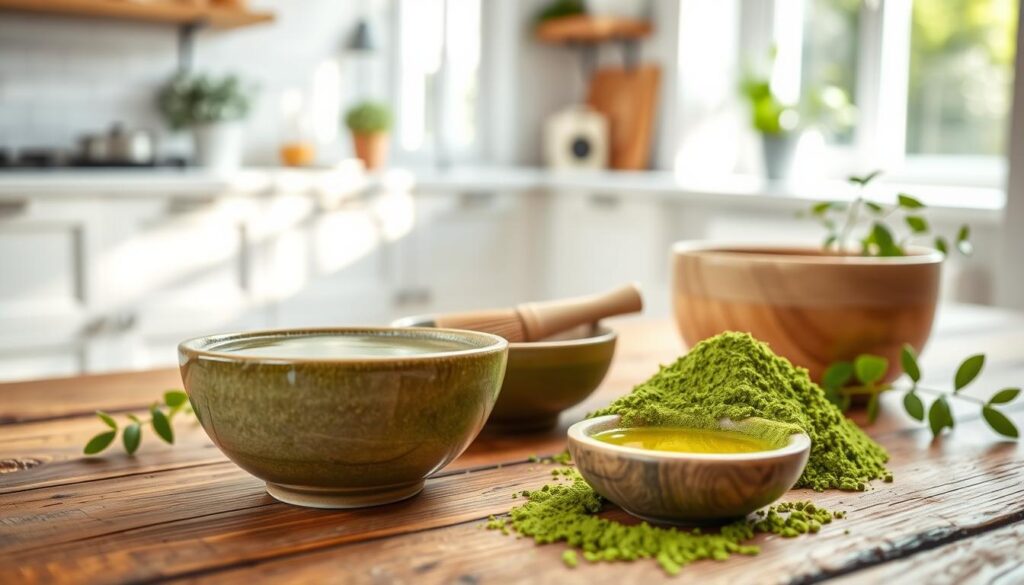
A fine green powder from Japan creates a cup that uses the whole leaf rather than a steeped infusion. You whisk the powder into hot water and drink the suspended leaf particles.
Stone‑ground powder whisked into water
Traditional matcha green tea is stone‑ground into a silky powder. The powder is whisked with hot, not boiling, water to make a smooth, bright cup.
Why consuming the whole leaf changes nutrient content
Since you ingest the powdered leaf, more of the leaf’s compounds reach your body. That raises levels of polyphenols and catechins, including EGCG.
Amino acids such as L‑theanine also remain in the suspended leaf. This alters both the flavor and physiological effect compared with steeped green tea.
- Matcha green: whole‑leaf powder, whisked and consumed.
- Steeped green tea: leaves brewed then removed, lighter nutrient content.
- Result: matcha tends to taste greener and delivers higher antioxidant content per cup.
| Feature | Powdered whole‑leaf | Steeped green tea |
|---|---|---|
| Preparation | Stone‑ground powder + whisk + water | Loose leaves or bag + steep + discard leaves |
| Nutrient delivery | Higher polyphenols and amino acids per serving | Lower concentration; some compounds remain in leaves |
| Flavor | Concentrated, grassy, umami notes | Delicate, lighter green flavor |
What coffee is: caffeine, compounds, and what’s in a typical cup coffee
A brewed cup covers a wide range of drinks, from paper‑filter drip to rich espresso shots.
For this comparison, “coffee” means everyday brewed beverages: drip, pour‑over, French press, and espresso‑based drinks. Each method changes the final cup and its punch.
Common brew strengths and why a cup can vary
Bean type, grind size, water ratio, and brew time all alter caffeine and flavor. A standard 8oz cup often cites about 95mg caffeine, but real levels swing widely.
- Smaller, stronger servings (espresso) concentrate caffeine per ounce.
- Larger mugs or long brews raise total dose and amplify acute effects.
- Bean roast and extraction change acidity, aroma, and perceived strength.
Beyond caffeine, brewed drinks supply polyphenols and micronutrients such as riboflavin (vitamin B2) and magnesium. Stronger brews and larger servings can cause rapid stimulation, alertness, or shakiness in sensitive people.
Individual blood and cardiovascular sensitivity varies, so comparing servings—not just the word “coffee”—matters when judging health and later sections on caffeine effects.
| Aspect | Typical 8oz cup | Why it varies |
|---|---|---|
| Caffeine | ~95mg (range wide) | Bean, dose, and brew method |
| Key compounds | Polyphenols, B2, magnesium | Extraction and roast level |
| Common effects | Quick alertness, possible jitters | Stronger brews or large servings |
Caffeine content and energy boost: matcha vs. coffee
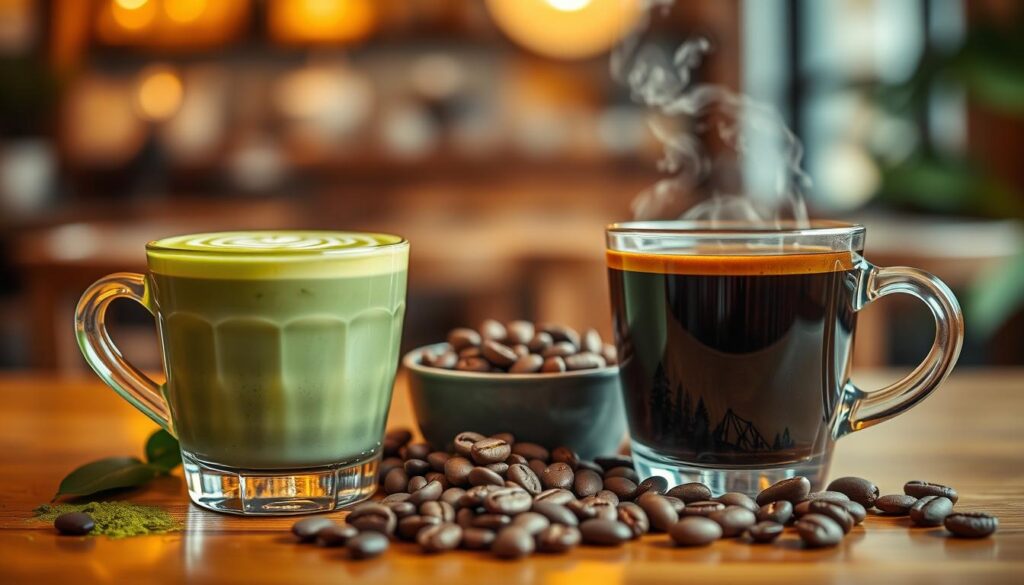
How quickly a drink wakes you up depends on both caffeine levels and the compounds that alter its effect.
Typical caffeine levels in a cup
A standard serving of matcha often has roughly 70mg of caffeine. A typical 8oz brewed cup of coffee usually runs near 95mg and can reach 100–140mg with stronger brews.
Keep in mind that serving size and brew method drive real levels. Measure your mug or latte to compare actual doses.
Why an amino acid changes the caffeine hit
Matcha contains L-theanine, an amino acid that slows caffeine absorption and alters how stimulation feels. This pairing tends to smooth the rise in alertness.
L-theanine supports calmer focus by promoting steady brain waves while caffeine provides the lift.
Crash, jitters, and smoother alertness
Coffee often gives a faster spike. That quick jolt can lead to jitters or a later drop, especially with high intake, sugar, or poor sleep.
Many people report a steadier energy boost from matcha tea, with fewer spikes and less of a sharp decline later in the day.
- Practical takeaway: for immediate intensity, choose a stronger brewed cup.
- For sustained, calmer focus, try matcha as a daily way to reduce edgy effects.
| Drink | Typical caffeine | Common effect |
|---|---|---|
| Matcha | ~70mg | Smoother, sustained alertness (L-theanine present) |
| Coffee | ~95mg (often higher) | Faster spike, possible jitters and crash |
Daily effects on your body: focus, mood, and stress
Daily sipping can shape how your body handles focus, mood, and stress across a workday. The way a drink lands matters more than the label on the cup.
For many people, the felt effects go beyond alertness. The drink you choose alters focus quality, mood stability, and the body’s stress response. Some cups leave you grounded; others make you feel wired.
Calm-but-alert energy and alpha-wave associations
When tea contains an amino acid called L-theanine paired with caffeine, it often produces steady attention. Studies link this combo to increased alpha-wave activity, which many associate with relaxed focus.
Why some coffee drinkers notice anxiety or shakiness
High caffeine intake or sensitivity can cause anxiety, shakes, heart racing, and a constant “on edge” feeling. Multiple servings raise the chance of these side effects, especially with poor sleep or low hydration.
- Focus: smooth, sustained attention with tea that has L-theanine.
- Mood: fewer spikes when stimulation rises gradually.
- Stress: lower acute stress responses for many users with theanine pairings.
- Side effects: watch for palpitations or jitteriness with repeated strong brews.
| Aspect | tea with L-theanine | coffee |
|---|---|---|
| Body feeling | Calm, focused | Alert, sometimes wired |
| Common effects | Sustained attention | Quick spike, possible crash |
| Health notes | May reduce stress responses | Monitor intake if anxiety occurs |
Quick self-check: if coffee routinely spikes stress, try tea with L-theanine for similar focus and fewer uncomfortable effects. Also mind sleep, hydration, and food—these change how caffeine hits your system.
Antioxidants and polyphenols: which drink delivers more benefits?
Understanding antioxidants helps you pick a daily cup with real health benefits. These compounds fight oxidative stress and are linked to long-term wellness in many studies.
Catechins, EGCG, flavonoids, and whole‑leaf power
When you consume powdered green tea, you ingest the whole leaf. That raises intake of catechins, especially EGCG, plus other flavonoids and polyphenols.
Researchers often point to these compounds for cardiovascular support and possible links to reduced disease risk. Still, beverages are not treatments or cures for cancer or illness.
Coffee’s polyphenols and balanced perspective
Brewed coffee supplies its own polyphenols and antioxidants that show health benefits in population studies. It offers a different mix of compounds and practical perks like stronger stimulation and flavor.
Choose based on priority: if antioxidants top your list, powdered green tea usually wins. If taste and a sharper lift matter more, brewed coffee still provides meaningful health value.
| Feature | Powdered green tea | Brewed coffee |
|---|---|---|
| Main antioxidants | Catechins (EGCG), flavonoids | Chlorogenic acids, other polyphenols |
| Typical advantage | Higher concentrated antioxidant dose per serving | Wide polyphenol variety and habitual intake benefits |
| Research notes | Linked to heart support and reduced disease associations | Associated with reduced risk markers in population studies |
Oral hygiene and teeth: staining, plaque, and breath
Daily sipping raises two common concerns: how drinks affect tooth color and how they change mouth odor.
Why green tea powder may help breath and reduce plaque bacteria
Catechins in powdered green tea show antibacterial activity that can lower plaque‑forming microbes. That effect can help freshen breath and support gum health when used as part of good oral hygiene.
Why brewed beans are linked to staining and lingering odor
Brewed beans often cause visible staining on enamel and a characteristic mouth smell after sipping. Adding sugar or flavored syrups increases acidic exposure and raises risk to teeth.
- Cosmetic: tooth staining from dark brews versus lighter staining risk with green tea powder.
- Breath: catechins may reduce halitosis; strong brews can leave lasting aroma.
- Care: rinse with water, avoid immediate brushing after hot drinks, and time brushing 30–60 minutes after acidic lattes.
- Habit tip: a small cup of green tea powder after meals often helps breath control compared with a long, lingering brew.
| Concern | Green tea powder | Brewed drink |
|---|---|---|
| Staining on teeth | Low to moderate | Higher, visible over weeks |
| Breath impact | May reduce bad breath | Often leaves lingering odor |
| Plaque and bacteria | Catechin antibacterial effects | No specific antibacterial action |
If tooth appearance and fresh breath rank high, choose green tea powder as a daily habit while keeping routine dental care. Small moves — rinsing, timing brushing, and limiting sugary add‑ins — protect teeth and boost oral hygiene.
Weight loss and metabolism: what matcha may do differently
What you sip before a workout can influence short‑term fat burning and hunger cues.
Many weight loss claims mean modest metabolic shifts, not magic. Small changes in resting calorie burn, appetite control, and exercise output can add up over weeks. Use drinks as one tool among diet, sleep, and training.
Pre‑workout timing and fat‑burn support
Studies suggest powdered green tea taken before exercise may boost fat oxidation during the session. That effect appears when caffeine and catechins work together to increase energy use in short windows.
Energy spikes, cravings, and appetite swings
A sharp caffeine spike from a strong brewed cup can cause some people to feel hungry or crave sweets later in the day. These swings may blunt weight control if extra calories follow the crash.
- If spikes trigger cravings, reduce dose or switch to a gentler option to smooth energy.
- Use the drink before workouts to potentially improve fat burning and workout intensity.
- Remember: overall weight outcomes depend mainly on diet quality, training, sleep, and consistency.
| Factor | Powdered green tea | Brewed drink |
|---|---|---|
| Typical impact on weight | Small boost in fat oxidation when timed with exercise | Can increase energy but may lead to appetite swings |
| Appetite control | Often steadier, fewer late‑day cravings reported | Possible spike‑and‑crash, more hunger for some people |
| Practical tip | Drink before workouts; pair with protein and water | Lower dose or add protein/fiber to reduce cravings |
Heart health and blood pressure: what the research suggests
Research links certain tea compounds to small but meaningful changes in heart and vessel health. Green tea catechins show associations with improved vascular function and modest LDL cholesterol reduction in many studies.
Green tea catechins and cardiovascular markers
Evidence suggests green tea compounds may help lower LDL and support blood vessel flexibility. Those effects contribute to overall heart health and may help reduce long‑term disease risk when paired with good diet and exercise.
Caffeine sensitivity and pressure caution
Caffeine can raise heart rate and pressure in sensitive people. If you notice palpitations, headaches, or spikes in blood pressure after drinking, reduce intake or try a gentler option with lower stimulant dose.
- Matcha provides green tea catechins plus moderate caffeine and may suit daily use for many adults.
- Coffee delivers beneficial compounds too, but higher caffeine intensity can aggravate pressure sensitivity for some.
- Monitor one cup versus multiple cups; note symptoms and measure blood pressure if you have risk for heart disease.
| Factor | Green tea option | Brewed drink |
|---|---|---|
| Key advantage | Catechins, vascular support | Polyphenols, strong stimulation |
| Pressure effect | Often milder due to lower stimulant dose | Can raise pressure in sensitive people |
| Practical advice | Track symptoms; discuss with clinician if hypertensive | Lower dose or switch if you get palpitations |
Taste, ritual, and preparation: the best way to drink each
Taste and ritual shape how a daily cup fits into your morning and mood. The right way to prepare a drink makes it feel thoughtful and repeatable.
Flavor notes you can expect
High-quality powder often tastes earthy and grassy with a touch of umami. Good batches can show a light sweetness that balances green astringency.
By contrast, coffee brings roasty, bitter-sweet profiles with caramel or nut notes depending on roast and beans. That contrast helps explain why some people swap one for the other based on mood.
Fast, repeatable prep
Measure 1–2g powder into a bowl or cup. Add hot (not boiling) water — aim near 170°F — then whisk until smooth and lightly foamy. Too-hot water can make the flavor harsh.
For iced versions, shake powder and cold water in a jar with ice. For a creamier cup, stir culinary-grade powder into steamed or frothed milk for a latte-style drink.
- Quick swap ideas: replace a second cup of coffee with iced matcha; order a matcha latte instead of a sugary espresso drink; try a half-caf routine mixing both.
Want more tips on swapping routines? Check this guide for practical coffee matcha swaps.
Is matcha better than coffee for you? Here’s how to decide and switch smoothly
Your ideal daily cup depends on tolerance, routine, and the kind of focus you want.
Top reasons some people choose powdered green tea
Many pick this option for smoother energy and less jittery stimulation. The L-theanine pairing offers calm focus while caffeine fuels alertness.
Other perks include a concentrated antioxidant profile and fewer common side effects for sensitive users.
Serving guidance and safe daily limits
Start with 1–2g (about 1/2 tsp) per cup and judge how you feel. Most adults can try 2–3 servings per day if sleep and symptoms stay fine.
How to transition and avoid withdrawal headaches
Swap your second brewed cup first, then taper the first over 1–2 weeks. Don’t quit cold turkey.
Hydrate, keep steady sleep, and add small protein snacks to reduce dependency and ease withdrawal.
Quality and simple tools for a consistent cup
Choose culinary grade for lattes and higher grades for straight bowls; good powder tastes less bitter and more umami.
- Use a scoop for dosing and a sieve to prevent clumps.
- Whisk or electric frother gives a smooth texture fast.
- Time drinks morning or early afternoon if caffeine affects sleep.
| Factor | When to choose powdered green tea | When to keep brewed | Practical tip |
|---|---|---|---|
| Energy style | Smoother, sustained | Faster, stronger spike | Try a half-caf mix if undecided |
| Side effects | Fewer jitters for many | May cause anxiety or crash | Taper over 1–2 weeks to avoid withdrawal |
| Preparation tools | Scoop, sieve, whisk/frother | Drip, espresso machine, French press | Pick tools that fit your morning routine |
Not sure yet? Read a short guide on practical coffee matcha swaps to test a gradual switch this week.
The final pour: choosing matcha, coffee, or a smarter mix for your day
Balance intensity and calm by planning when you drink each cup. For many, matcha brings smoother energy and oral health benefits, while coffee delivers stronger flavor and a quicker lift.
.
Three practical paths: try a matcha-first routine for steady focus; keep a coffee-first morning with smaller doses; or use a mixed way—coffee early, then matcha tea later to dodge the afternoon crash.
Watch total caffeine levels and note your personal effects. If you feel anxious or shaky, lower stimulant dose and swap part of the day to the gentler option. If you feel fine, focus on quality and moderation.
Both choices can fit a healthy lifestyle. Pick the ritual that supports your energy, mood, and long-term health—and stick with it.