is coffee gluten free
Plain beans do not contain wheat or related proteins, so a plain cup is typically safe for most people. The real question is what lands in your cup after the brew. Syrups, flavored creamers, and add-ons can add hidden gluten or cause cross-contact.
This guide helps readers with celiac disease, those with gluten sensitivity, and anyone tracing symptoms after a drink. You will learn practical checks, not rules that cause worry. The aim is confident choices when you buy pods, instant mixes, or order at a U.S. café.
Big takeaways: beans lack gluten, watch syrups and mix-ins, and treat oat milk with care. Also remember that caffeine and acidity can trigger digestive symptoms, so a reaction after a cup does not always mean gluten exposure.
Later sections show easy product shopping tips and safe ordering phrases for cafes. With a few simple checks, most orders fit a restricted diet with minimal fuss.
Quick answer: plain coffee and espresso are naturally gluten-free
When you drink an unflavored brew made only from roasted beans, the risk of gluten exposure is very low.
Why beans don’t contain gluten
Roasted coffee beans come from a plant that does not produce wheat proteins. In ingredient terms, that means no wheat, barley, or rye is involved. Selena Devries, RD, says a plain cup “always” fits a celiac-safe pattern when nothing else is added.
Black brew, espresso, and decaf basics
Black drip, an espresso shot, and decaffeinated coffee share the same origin: roasted beans. The differences are grind size, pressure, and decaffeination process — not added grains. So each starts out without gluten.
- Plain black or espresso drinks are low-risk for gluten exposure.
- “May contain” labels usually refer to shared facilities, not ingredients.
- Decaf remains the same type of product unless flavorings introduce contaminants.
Next: two real exceptions exist — cross-contamination during processing and added ingredients such as syrups or inclusions. Plain orders usually carry much less risk than mixed or flavored drinks.
Is coffee gluten free in real life? Where gluten can sneak in
The real-world risk usually comes after roasting, during handling, flavoring, or packaging. Shared equipment and mixed facilities can leave tiny residues that matter for people with celiac disease.
Processing and supply-chain cross-contamination risk
Cross-contamination happens when beans touch lines that also run grain-based goods or flavored mixes. Roasting houses, flavor stations, grinders, and packaging lines all create contact points.
More processing can mean more risk for trace contamination
Compare whole bean, ground, and instant: whole bean has the least handling. Ground moves through extra machinery. Instant undergoes the most steps and can pick up more stray residues.
- Trace residues are not the same as a listed ingredient; they are cross-contact.
- Products with added flavors or inclusions pose higher risk than plain items.
- Certified gluten-free labeling can help people who react to very low traces.
FDA labeling and the 20 ppm standard
In plain terms, the U.S. rule lets manufacturers label a food gluten-free when gluten is under 20 parts per million (ppm). That limit guides testing and gives a consistent threshold for shoppers.
| Product type | Processing level | Relative risk |
|---|---|---|
| Whole bean | Low | Lower |
| Ground | Medium | Moderate |
| Instant | High | Higher |
Several consumer resources and at least one study flagged higher contamination potential in more processed plant products, especially instant forms. Use this as decision support, not alarm: many items test below thresholds, but extra care fits those with severe disease.
For specific shopping tips and safe orders, see our detailed guide.
Celiac disease, gluten sensitivity, and coffee: what reactions might really mean
Many digestion problems after a cup come from the drink’s acidity or stimulant effects, not from grain proteins. That makes it important to separate ingredient risk from personal tolerance.
Digestive triggers that mimic exposure
Stimulation of gastric acid can cause nausea, heartburn, and loose stools. Those symptoms often feel like having been exposed to wheat, especially soon after diagnosis.
Caffeine, IBS, and sensitivity overlap
High caffeine consumption can worsen acid reflux and bowel urgency. People with IBS sometimes react to both regular and decaf drinks because other compounds may still irritate the gut.
- Track symptoms and servings for one to two weeks.
- Try smaller portions, darker roasts, or switching to tea temporarily.
- Eliminate then reintroduce the drink to see if symptoms return.
| Cause | Typical signs | How to test |
|---|---|---|
| Acidity/caffeine | Heartburn, nausea | Reduce intake; try decaf or tea |
| IBS overlap | Bloating, urgency | Symptom diary; consult dietitian |
| Cross-reactivity (rare) | Reported with some instant products | Check product tests; eliminate suspect brands |
If symptoms ease when the drink is removed and return on reintroduction, personal tolerance—not ingredients—may be the issue. For persistent problems, seek medical or dietitian support to rule out other causes and guide safe choices.
Milk, oat milk, and plant-based options in coffee drinks
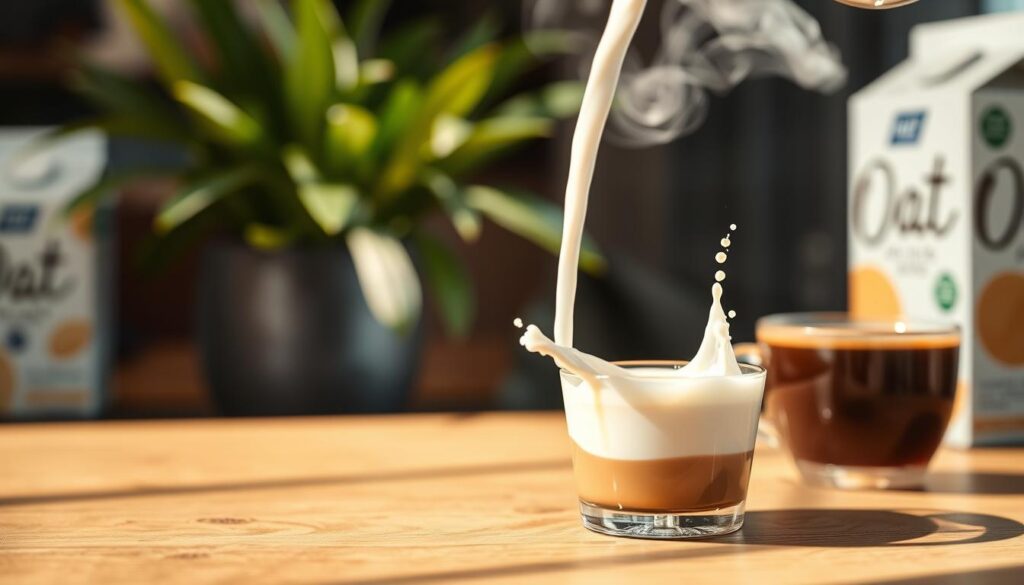
Milk choices change the risk profile of a drink for people with celiac and those with sensitivity. Regular dairy milk is naturally gluten-free and often makes a latte a straightforward option.
Regular dairy and what to expect
Plain cow’s milk contains no wheat proteins, so it poses minimal ingredient risk when nothing else is added. Many shops pour dairy with little handling that would cause cross-contact.
Oat milk — when to accept it
Oats are often contaminated during growing or processing. That means oat milk should be certified gluten-free or made from gluten-free oats to be safe for most celiac customers.
One U.S./Canada example is Oatly, which carries certified gluten-free labeling in those markets and is used by some chains and cafés.
Almond, soy, and other plant milks
Almond milk and soy milk are usually gluten-free, but formulations vary. Check ingredient lists and shared-facility statements, especially for flavored varieties.
Also consider personal tolerance: dairy causes symptoms for some people even when it poses no ingredient risk. Choose the milk that fits both safety and comfort.
- If a shop cannot confirm certified oat milk, ask for dairy or an unflavored almond/soy option.
- Always scan ingredient panels on bottled milks when possible.
- When in doubt, request plain milk with no added syrups or mix-ins.
| Milk type | Ingredient risk | Practical tip |
|---|---|---|
| Dairy milk | Low | Good default for many people with celiac |
| Oat milk | Variable; higher without certification | Use certified gluten-free or Oatly (US/Canada) when available |
| Almond/soy milk | Usually low | Check labels; avoid flavored versions if unsure |
Flavorings, syrups, and creamers: the most common gluten risks in a cup
The moment a syrup pump, sprinkle jar, or creamer pitcher is opened, ingredient risk rises for people avoiding wheat. Plain beans start safe, but add-ins can change that quickly.
Many syrups and industrial flavorings do not contain gluten. Brands such as Monin and Torani report most flavors are clear of wheat-derived ingredients. Still, formulations can change, so best practice is to verify at the shop.
Check before you order
Ask staff to show an ingredient list for any syrup or topper. A short script works well: “Can I see a list for that syrup or topping? Does it say it may contain wheat or list gluten?”
What to watch for in add-ins
Inclusions — cookie crumbles, brownie bits, sprinkles, boba, and dried fruit — are the most common culprits. These can contain wheat or be handled where wheat products exist.
Creamers and “natural flavors”
Flavored creamers sometimes hide wheat-based thickeners or complex flavor systems. Read labels or choose plain milk when the list is unclear.
“Natural flavors” are usually not a gluten problem in roasted bean products, per Selena Devries, RD and industry FAQs. Still, confirm on mixed drinks that include commercial flavor systems.
- If the staff cannot confirm, pick simpler drinks with one syrup or none.
- Skip inclusions and seasonal toppers when in doubt.
- Request ingredient lists and note any “may contain” statements before you pay.
| Add-in type | Typical risk | Quick check |
|---|---|---|
| Syrups | Usually low; verify | Ask for ingredient list or brand FAQ |
| Inclusions (crumbles, sprinkles) | Higher; often contain wheat | Request label or avoid |
| Flavored creamers | Variable; hidden thickeners possible | Read bottle label; choose plain milk if unsure |
Pods, instant coffee, and ground coffee: choosing safer coffee products at home
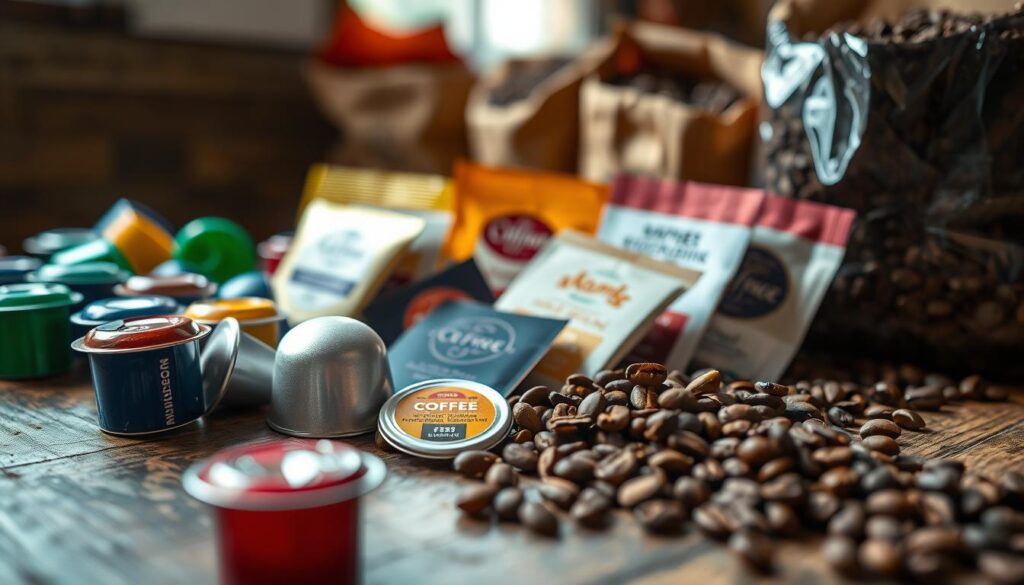
Home grinding and minimal processing keep your morning cup closer to its original form. Start with whole beans when you can. They undergo the least handling and carry the lowest cross-contamination risk.
Whole bean advantage
Whole bean purchases let you control when and where grinding occurs. Grinding at home avoids shared equipment and limits stray residues.
Shared grocery-store grinders
Public grinders often see many products back to back. Shops rarely deep-clean between users, so cross contact is hard to verify. If in doubt, skip the in-store grind.
K-Cups, pods, and major brands
Pod makers vary in statements and guarantees. Keurig says most K-Cups are labeled gluten-free, with a Timothy’s Lemon Blueberry exception (trace malted oats). Nespresso reports no gluten in its pods. Starbucks Dolce Gusto (Nestlé-made) lists no wheat ingredients.
- Dunkin: some pods have wheat contact or contain gluten ingredients.
- Lavazza: products are coffee-only but stop short of a full supply-chain guarantee.
- Peet’s: capsules are not certified gluten-free.
- Kraft Heinz: limited allergen detail for certain pods.
Instant products and contamination concerns
Instant formats are highly processed. Ingredients often list just coffee, yet processing steps raise attention in some studies and reports. A small number of instant preparations showed cross-reactivity in research contexts, so inspect labels closely if you react to traces.
| Product type | Typical processing | Practical tip |
|---|---|---|
| Whole bean | Low | Grind at home |
| Ground | Medium | Prefer sealed bags from trusted brands |
| Instant/Pods | High | Check brand allergen statements |
Quick checklist: choose minimally processed products, avoid shared grinders, seek clear brand statements, and contact manufacturers when sensitivity is high.
Ordering coffee safely at US coffee shops without overcomplicating it
A short set of checks makes most in-store orders safe for people managing celiac disease. Keep choices simple and ask two clear questions when you order. Fewer ingredients mean less chance of a problem.
Best low-risk orders for people with celiac disease
Default safe picks: black drip, straight espresso shots, and lattes or cappuccinos made with regular milk when tolerated. These present the fewest ingredient variables.
- Order plain drinks without toppers or inclusions.
- Choose dairy or a verified alternative over unknown oat milk.
- Skip seasonal syrups unless you can see an ingredient list.
How to ask about ingredients and use online allergen menus
Ask staff: “Can I see the ingredient list for that syrup or creamer?” or “Is the oat milk certified gluten-free?” Short, calm questions get results and keep the line moving.
Many chains publish ingredient lists and allergen pages online (for example, Starbucks US ingredients list). Check those pages before you arrive to reduce in-person stress.
Steamer wand cross-contact: what the science suggests
Steamer wand residue worries are common but not a major celiac risk, per Selena Devries, RD. Even an unlikely 1-tablespoon transfer from 12 ppm oat milk equals roughly 0.0843 mg of gluten—far below daily tolerable levels cited for most people with celiac disease.
If concerned, request a fresh pitcher or ask the barista to steam milk in a clean container. That simple step removes doubt without drama.
| Action | Why it helps | Quick script |
|---|---|---|
| Choose plain drinks | Fewer ingredients, lower risk | “I’ll have a plain latte, no syrup or toppings.” |
| Check online menus | See brand ingredient lists ahead of time | “I checked your allergen list—can you confirm the oat milk is certified?” |
| Ask about steaming | Prevents any minor cross-contact | “Could you steam milk in a clean pitcher for me?” |
With a smart order and two simple questions, most people can enjoy café drinks confidently. Keep orders short, verify suspicious add-ins, and favor items with fewer ingredients to lower risk.
Enjoying coffee on a gluten-free diet with confidence
Enjoying a daily brew while avoiding wheat relies mostly on smart choices, not strict bans. Focus on simple orders and clear labels to lower risk and keep meals in your usual routine.
Remember the quick checklist: plain coffee or espresso usually stays safe; added syrups, creamers, and inclusions raise the chance of contamination. Choose whole beans at home and ask staff about ingredient lists when you order.
If you notice symptoms after a cup, consider caffeine, acidity, or IBS overlap before assuming gluten exposure. A short reset helps: try black brew for a week, then add one ingredient at a time to find the trigger.
If a drink bothers you, try tea or lower-caffeine roasts and adjust portion size. For people with celiac disease or gluten sensitivity, scan labels on instant products and specialty add-ins.
Keep choices high-impact, not perfection-driven. Seek advice from a registered dietitian or trusted allergen resources for extra support when needed.