how to remove coffee stain from carpet
Spilling a warm cup can feel urgent, but calm action works best. This short guide shows what to do right away and what to try later for older marks.
First, blot gently — never rub — to avoid spreading the spot or harming fibers. Small moves with a clean cloth prevent more damage.
Next, learn why a mark can reappear as the area dries. Residue and trapped moisture cause rings, so full removal and patience matter.
We preview safe DIY mixes, baking soda lifts, peroxide for light rugs, rewetting for old areas, and when an enzyme product might be best. Note: delicate rugs and manufacturer rules may change your approach.
Goal: lift the mark without spreading or fiber damage.
Expect some effort if milk, sugar, or syrup are present.
Act fast after a coffee spill on carpet
Minutes matter after a spill; prompt steps save fibers and color. Start with a calm plan: absorb excess liquid, avoid spreading the mark, and limit wetting of the pad beneath.
Blot, don’t rub
Press a clean white cloth or paper towel down and lift straight up. Repeat, switching to a dry section each time. Do not rub; that pushes the dark pigment deeper and widens the spot.
Work from edges toward the center
Move inward with gentle pressure. This edge‑to‑center pattern keeps the area contained. Change towels often so you are always absorbing, not smearing.
Dilute with cold water, then blot again
Add a small amount of cold water to the area and blot. Use only enough water to lift more liquid—avoid soaking the backing. Stop when little transfers to the cloth, then follow a cleaning solution step later.
- Why speed matters: faster action prevents deeper fiber penetration.
- At home tip: keep paper towels handy and remove mugs from rugs.
- If milk or sugar was present, expect extra residue and follow-up cleaning.
| Quick action | Tools | Goal |
|---|---|---|
| Immediate blotting | Clean white cloth / paper towels | Absorb excess liquid, prevent spread |
| Edge-to-center blot | Multiple towel sections | Contain the mark, protect fibers |
| Cold water dilution | Small cup of cold water | Lift more spill without soaking padding |
Why coffee stains carpet fibers so quickly
A spilled drink can cling to fibers faster than you expect, and the chemistry explains why.
Tannins act like dye
Tannins in the brew bind tightly to fiber strands. They give a dark color that feels permanent quickly.
Oils and proteins make cleanup harder
When milk or cream is mixed in, fats and proteins form a layered spot. That layer holds the pigment and resists simple cleaning.
Sugars attract dirt later
Sweeteners and syrups often leave sticky residue. Even if the color fades, the tacky film will catch dirt and make the area look dingy.
- Black brew: mainly pigment; cold water helps lift it.
- Latte/cream: needs a cleaner for oils and proteins.
- Sweetened drinks: rinse and remove sticky residue fully.
| Spill type | Primary issue | Best early step |
|---|---|---|
| Black | Tannins bind | Cold water blot |
| With milk | Oils & proteins | Targeted cleaner |
| Sugary | Sticky residue | Rinse and blot |
Slow drying or high humidity lets moisture linger and can make marks reappear. Patch testing is next, since fibers and dyes vary and stronger cleaners can affect color.
Before you clean: patch test and protect your carpet
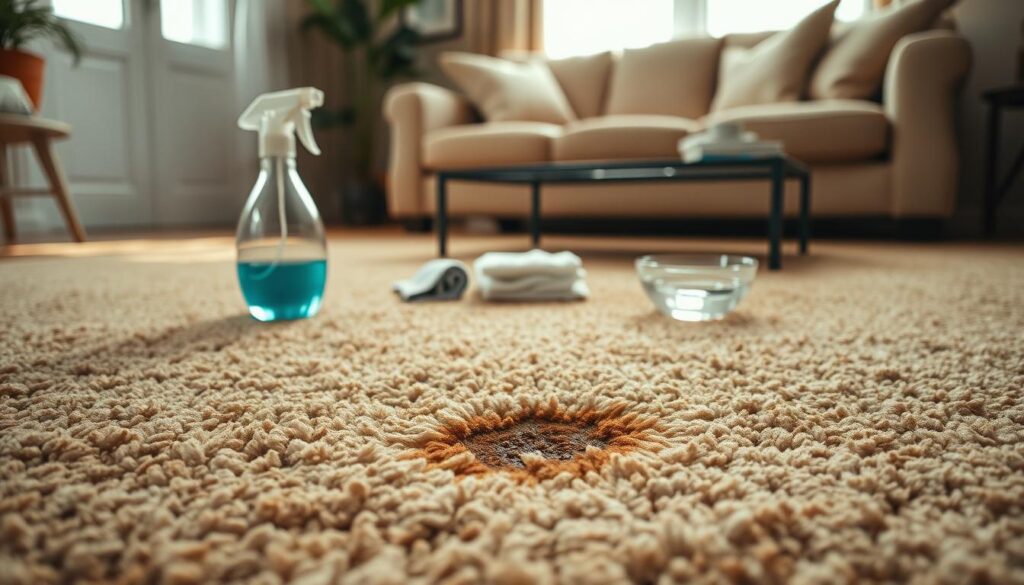
Never assume a product is safe for your rugs. A quick test and a little prep prevent faded color or warped fibers.
Try a small patch first
Apply a drop of the cleaning solution in an inconspicuous area such as under furniture. Wait five minutes, blot, and inspect for color change or pile distortion.
Know your material limits
Wool needs gentle, low-alkaline cleaners and less agitation. Synthetic carpets often handle stronger products but can still react to harsh chemicals.
- Place a dry towel around the spill area to catch drips and keep treatments contained.
- Avoid stiff brushes or power tools that can fuzz loop‑pile or thin wool fibers.
- Ventilate the room and keep kids and pets away while the area dries.
- Check manufacturer care instructions; using unsanctioned methods may void a warranty.
| Carpet type | Risk | Best practice |
|---|---|---|
| Wool | Sensitivity to alkali | Patch test; use mild cleaners |
| Synthetic | Chemical reaction | Test small area; stronger cleaners may work |
| Loop pile | Snagging/fuzzing | No aggressive agitation |
How to remove coffee stain from carpet with a simple DIY cleaning solution
A quick, simple mixture can tackle fresh spills without harsh chemicals. Follow the exact recipe and gentle steps below for best results.
Make the vinegar and soap mixture
Mix 1 tablespoon white vinegar, 1 tablespoon dish soap, and 2 cups warm water. Vinegar helps break down tannins while dish soap lifts oily components.
Apply carefully and let the solution work
Dampen a clean cloth with the solution—do not soak it. Work from the outer edge toward the center to keep the mark contained.
Blot, repeat, then rinse
Let the mixture sit 3–5 minutes. Blot—don’t rub—until color transfer lessens. Reapply and blot in short cycles, switching to clean towel sections.
Rinse and dry the area
Rinse with cold water to remove soap residue. Press with a dry towel, and if needed, layer paper towels and place a light weight on top to draw out moisture.
- Success looks like fading on the cloth and no spreading on the pile.
- Avoid saturating the padding; trapped moisture can cause odor or mildew.
| Step | Action | Why it matters |
|---|---|---|
| Mix | 1 tbsp white vinegar + 1 tbsp dish soap + 2 cups warm water | Targets tannins and oils without harsh chemicals |
| Apply & dwell | Dampen cloth, treat outside→center, let sit 3–5 minutes | Allows solution to break bonds before blotting |
| Rinse & dry | Cold water rinse, blot dry, weight paper towels if needed | Removes residue and prevents wicking as it dries |
Using baking soda to lift coffee stains and neutralize odor
A paste made from a common household powder can pull out particles and neutralize odors as it dries. This method works well after initial blotting or when a faint mark and lingering smell remain.
Make the paste and let it dry fully
Mix three parts warm water with one part baking soda until spreadable. Apply a thin, even layer over the affected area. Do not grind the paste into fibers; keep it gentle.
Vacuum residue and restore texture
Allow the paste to dry completely; drying is what lifts discoloration and draws out moisture. Vacuum slowly in several passes to remove residue and restore pile and color.
- When to use: after blotting and DIY cleaners, or for older, stubborn marks.
- If the spot is still damp, blot with a clean towel first so the soda doesn’t turn into mud.
- Repeat the paste step once if faint traces remain rather than wetting the area again.
| Step | Action | Result |
|---|---|---|
| Paste mix | 3 parts water : 1 part baking soda | Spreadable paste that absorbs particles |
| Dry time | Let fully dry (several hours) | Maximizes lift and odor neutralizing |
| Vacuum | Slow multiple passes | Removes residue, restores fibers |
For more background on using baking powder for rugs, see baking soda cleaning.
Safely using hydrogen peroxide on light-colored carpet
On light rugs, a mild hydrogen peroxide blend can lift deep marks that earlier steps missed. Only use this on pale or colorfast areas after a strict patch test.
Make the peroxide mix
Combine 1 cup hydrogen peroxide with 1/2 teaspoon dish soap. The peroxide helps break pigment while the soap tackles oily residue.
Apply, dwell, then blot
Test a hidden corner first. If no color change appears, apply a small amount with a clean cloth. Let sit for about 10 minutes, then blot the area until the solution lifts.
Rinse and dry thoroughly
Rinse with cold water to remove residue. Press with a dry towel and allow full drying to stop marks from reappearing. If the patch shows any fading or stress, stop and try gentler cleaners or a professional service.
- Only for light, colorfast areas.
- Patch testing is mandatory before full use.
| Step | Action | Why |
|---|---|---|
| Mix | 1 cup peroxide + 1/2 tsp dish soap | Lifts pigment, removes oils |
| Test | Patch in hidden area | Prevents bleaching |
| Rinse | Cold water, blot dry | Removes residue, prevents wicking |
How to remove old or dried coffee stains from carpets
Dried spots bond to fibers; gentle rehydration loosens them for lifting.
Rehydrate the mark with warm water
Lightly dampen the area with warm water—do not soak. Let the moisture sit a few minutes to soften the dried residue.
Use the vinegar and dish soap mixture with controlled blotting
Mix 1 tablespoon vinegar, 1 tablespoon dish soap, and 2 cups warm water. Apply the blend in short, measured amounts. Work from the outer edge inward and blot with a clean cloth.
Repeat short cycles until progress slows
Cycle: apply → brief wait → blot → rinse. Switch towel sections often so you lift rather than spread the mark. Avoid over‑wetting the pad beneath.
- Set‑in stains may need several rounds; be patient.
- Avoid scrubbing; harsh agitation can harm pile.
- Rinse with cold water and press dry with towels when done.
| Step | Action | Why |
|---|---|---|
| Rehydrate | Warm water, few minutes | Softens bonded residue |
| Treat | Vinegar + dish soap mixture | Breaks pigment and oils |
| Finish | Rinse & dry | Prevents wicking and odor |
Press with absorbent towels and allow airflow until fully dry. If results stall, consider a targeted commercial cleaner or professional help rather than forcing the area and risking damage to your carpet.
When DIY isn’t enough: enzyme cleaners and commercial carpet cleaners
Persistent spots or wide affected areas call for enzyme blends or machine extraction. These options break down organic residues that simple mixes can miss.
Choose enzyme cleaners for dairy or sugary spills
Enzyme formulations target proteins and fats found in milk, cream, and sweeteners. Let the product dwell about 10–20 minutes per label, then blot and rinse well.
Selecting a store-bought remover
Pick a product that lists coffee or food stains on the label and is safe for your fiber type. Good examples include Folex Instant Carpet Spot Remover, Bissell Professional Power Shot Oxy, Resolve, and Hoover Platinum.
| Product type | Best use | Note |
|---|---|---|
| Enzyme cleaner | Dairy & sugary spills | Dwell 10–20 minutes; rinse |
| Oxygen-based | Pigment lift | May need repeat; rinse |
| Extraction machine | Large or set-in areas | Removes solution and moisture |
Application tips to avoid residue
Use products sparingly and follow rinsing steps. Excess residue attracts dirt and makes the spot look worse later.
- Test in a hidden spot first.
- Blot after dwell time; never scrub hard.
- Extract or rinse and dry thoroughly to prevent re-soiling and moisture problems.
Mistakes that make coffee stains worse
One wrong move often makes a dark spot harder to lift. Small errors can push pigment deeper into the pile and lengthen cleaning time.
Scrubbing instead of blotting harms fibers
Rubbing frays fibers and spreads the mark. Press a clean cloth or paper towel, lift, and repeat with fresh sections.
Using hot water too early sets pigments
Hot water can fix tannins into strands. Start with cold water, then move to a gentle solution if needed.
Over-wetting and skipped rinsing cause more problems
Too much liquid can soak the pad and let the spot spread. Leftover soap attracts dirt and can make the area look dirty again.
Also avoid mixing cleaners without reading labels. Follow directions and use short dwell times. Dry quickly with towels and airflow to stop moisture, odor, and mildew.
| Mistake | Effect | Quick fix |
|---|---|---|
| Scrubbing | Frayed fibers, larger mark | Blot gently; switch cloth sections |
| Hot water | Pigment sets deeper | Use cold first; patch test |
| Over-wetting | Pad soak, mildew risk | Use minimal liquid; dry well |
Keep your carpet looking fresh after coffee stain removal
Drying and follow-up care make the difference between a solved spill and a repeat problem. Press the area with a clean towel, then layer paper and set a light weight to draw out moisture. Increase airflow and keep feet off the spot until fully dry.
Once dry, vacuum the carpet to lift fibers and restore texture. Regular cleaning routines and prompt action for new stains keep rugs and carpets looking their best.
Use mats in high-risk zones, secure-lid travel mugs, and a small kit with cloths and a gentle cleaner at home. Periodic deep cleaning—DIY extractor or professional service—prevents build-up and reduces future stains.
With quick steps and smart care, most coffee marks can be lifted without lasting damage. These simple tips help your carpet stay fresh longer.