how to make turkish coffee
This short primer shows what you will learn: a classic stovetop method for brewing a thick, unfiltered cup at home. Expect a small, rich sip with sediment left in the cup, and tips for keeping a steady foam while avoiding bitterness.
Basics: very finely ground beans meet water in a cezve or small pot. Stir only while cold, warm slowly, and lift the foam gently before any rolling boil. The goal is a smooth extraction, not a harsh bite.
The article gives a repeatable recipe framework, timing hints for gas and electric stoves, and quick troubleshooting for common faults like over-extraction and excess agitation. If you want a full, practical guide, follow this linked setup for making turkish coffee at home: classic recipe and steps.
– Learn a reliable stovetop recipe and technique.
– Keep foam alive, avoid boiling, and leave grounds behind.
– Designed for US kitchens with basic gear.
Turkish Coffee Basics: What Makes It Different From Regular Coffee
A small pot and a very fine grind produce a brew with unique texture and strength. This unfiltered way uses a cezve or ibrik so grounds stay in the brew. You pour a short portion into a tiny cup and let sediment settle.
The result is bold and concentrated. A turkish coffee cup holds a thick sip with an aromatic lift and a layer of foam on top. Expect a fuller mouthfeel than a filtered coffee cup.
- Unfiltered brewing: grounds remain in the pot, then settle in the cup.
- Strength and texture: small volume, intense flavor, and dense body.
- Sensory notes: strong aroma, velvety foam, and a slow sip that stops before the sludge.
- Names you may hear in the US: cezve/ibrik coffee, Greek coffee, or Arabic coffee for similar methods.
Small regional tweaks exist—spice or sweetness choices differ—but the core way stays the same: very fine grind, gentle heat, and careful foam handling. The next section covers the exact grind size and basic tools that help you make turkish taste authentic at home.
What You Need to Make Turkish Coffee at Home
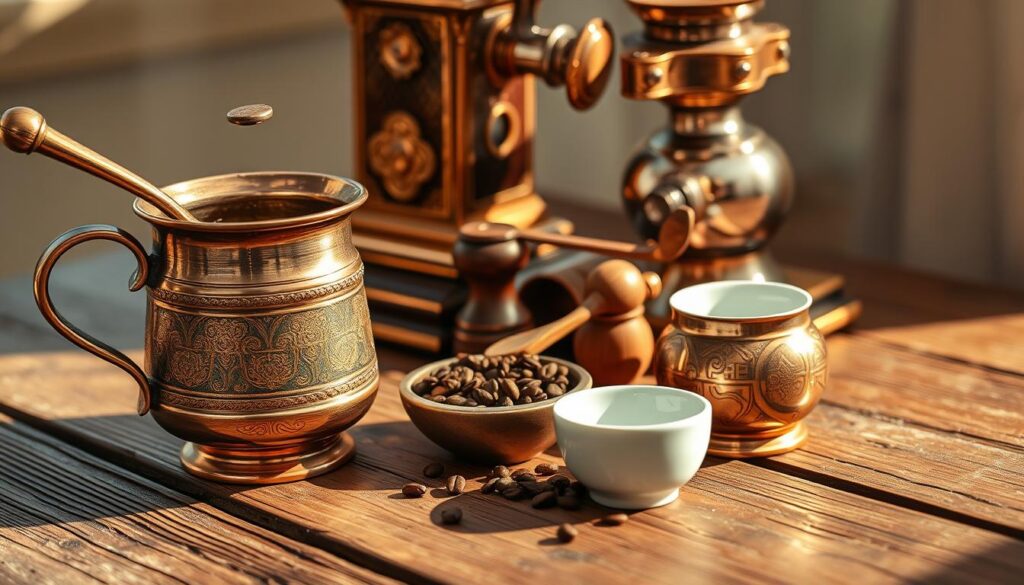
Gathering a few key tools and simple ingredients sets you up for an authentic cup at home.
Essential tools and smart swaps
Use a cezve or ibrik (the classic turkish coffee pot) for the best foam. If you don’t have one, pick the smallest, taller, narrow saucepan you own. A narrow shape helps the foam rise and concentrate.
Keep a teaspoon for measuring and stirring only while cold. Serve in small cups (demitasse-style) so each pour stays hot and focused.
Ingredients list
Your base needs finely ground coffee, cold water measured by cup, and sugar added during the brew if you want sweetness. Cardamom or mastic are optional for a regional touch.
Grind and practical notes
The grind must be finer than espresso—almost powder-like. Many home electric grinders struggle to reach this level, so buy a true grind or use a capable burr grinder.
- Do not stir after heating; that breaks the foam and muddles the cup.
- Match pot size to the number of cups for best foam control.
| Vessel | Pros | Cons |
|---|---|---|
| cezve / ibrik | Great foam, authentic | Single-purpose |
| small saucepan | Accessible, multi-use | Less foam control |
| measuring tools | teaspoon, small cups | None |
How to Make Turkish Coffee Step by Step
Use the actual cup you’ll drink from as the measuring tool for accurate portions. This keeps each serving consistent and avoids guessing when you pour from the pot.
Measure and dose
Fill each serving cup with cold water and pour that water into the cezve or small pot. Add a heaping teaspoon of finely ground coffee per cup.
If you want sweetness, add sugar now. You can also add a pinch of cardamom. Stir briefly while the pot is still cold so sugar dissolves and clumps break up.
Heat, watch the foam, and stop in time
Place the pot over low to medium heat. Aim for a slow foam rise that takes about 2–3 minutes rather than a hard boil.
Remove the pot when the foam swells toward the top and looks ready to surge. Pull it off before it boils to prevent bitterness and overflow.
Finish and pour gently
Optionally spoon a little foam into each cup, return the pot briefly to heat, then finish the pour. Pour slowly at an angle to keep grounds in the pot.
Let the brew settle for about a minute so grounds sink to the bottom. Drink the top and middle; leave the last sip behind with the sediment.
Foam, Heat, and Time: The Technique That Prevents Bitter Turkish Coffee
A steady, gentle heat is the secret that keeps bitter notes out of a classic cup. Watch the foam as the main indicator. That delicate layer shows extraction is moving at the right pace.
Why boiling and extra agitation ruins flavor
When the brew reaches a rolling boil or you stir after heating, tiny particles over-extract. Those fine solids release harsh, bitter compounds fast.
Keep agitation minimal. A violent boil breaks foam and pushes the brew past its best flavor.
Dialing your stove: read the rise in minutes
Use the cup-and-pot measure and time the foam rise. Aim for about 2.5–3.5 minutes on most stoves.
If the foam appears much faster, lower the heat. If it takes far longer, raise heat slightly or use warmer water.
Choosing water temperature for consistent results
Cold water lengthens brew time. Room temperature water is a reliable baseline for home kitchens.
When stove output is low or your pot is large, start near 140°F to shorten time and keep the cup balanced.
| Stove setting | Water start | Typical minutes | Cue |
|---|---|---|---|
| Low | Room | 3.0–3.5 | Foam rises slowly toward the top |
| Medium-low | Cold | 3.5–4.5 | Foam forms but is slow; adjust heat slightly |
| Medium | Warm (~140°F) | 2.0–3.0 | Foam swells quickly; pull at the moment it surges |
Troubleshooting quick map: sour taste = under-extracted (add a few seconds). Bitter = over-extracted (lower heat and stop earlier). The simple cue: when the foam island nears the top or starts collapsing, take the pot off the stove at that moment.
Sweetness Levels, Spices, and Popular Variations
Sweetness and a touch of spice let you shape each cup so guests enjoy their sip. Use sugar during the brew for best foam and even taste.
Sweetness vocabulary and measures
Menus often list sade (no sugar), az (light), orta (medium), and şekerli (sweet). For a ~60 ml cup, try these starting points:
- az: ~1/4 teaspoon sugar
- orta: ~1/2 teaspoon sugar
- şekerli: ~1 teaspoon sugar (adjust to taste)
Spices and aroma
Cardamom adds warmth and fragrance. Mastic gives a resinous, pine-like note used in some regions. Add a pinch with the ground before heating.
Chilled and hosting options
For iced turkish coffee, brew fresh and pour over ice; add milk if desired. For people with varying sweetness, brew small separate batches when possible.
Quick workaround: brew unsweetened, pour individual cups, then sweeten and reheat the remaining pot briefly for others.
Pair with a small candy or cookie—delight pairs especially well—and remember that proper technique keeps the cup balanced, even when sweetened.
How to Serve Turkish Coffee Like a Host

A thoughtful setup makes the drink feel special and helps guests taste the brew’s full aroma.
For a classic serving tray, use small coffee cups, a glass of water, and a sweet treat such as turkish delight or a bite-sized chocolate.
The classic setup
Place coffee cups on a small tray with a water glass beside each cup. Add a single sweet treat for each guest.
When to drink the water
Ask guests to sip water first. This clears the palate so the first coffee sip tastes more aromatic and balanced.
Sipping and what to leave behind
Serve shortly after brewing but wait a minute so the grounds settle at the bottom of the cup. Use narrower coffee cups when possible; grounds concentrate lower and stay out of each sip longer.
- Sip slowly and don’t swirl the cup.
- Stop before the last mouthful to avoid the sediment at the bottom.
- For US-friendly pairings, offer a small chocolate square, cookie, or candy if turkish delight isn’t available.
When hosting, ask sweetness preference first (sade/az/orta/şekerli). Adjusting after the brew is messy and harms the foam and serving flow. For a deeper guide on presentation and tradition, see an expert walkthrough at traditional service tips.
Your Next Great Cup: Practice, Adjust, and Enjoy the Ritual
Each pot, stove, and grind teaches a small secret about your next perfect cup. Track minutes for the foam rise, note stove setting and water start temperature, and you’ll build a reliable recipe for home use.
If foam swells too fast, lower the heat. If it takes too long, start with slightly warmer water or move the pot to a burner that matches its base size. Stop stirring once heating begins and pull the cezve off the stove before a rolling boil.
Taste-test: a bitter sip means shorten time and lower heat; a thin or sour cup asks for a slightly longer brew or a finer ground. With practice, you’ll reach a fragrant cup with a foamy top and settled grounds at the bottom—smooth, strong, and worth the ritual.