how to make pour over coffee
This short guide shows a repeatable way to brew a single cup at home with clear measurements, timing, and technique. It explains a manual method where you pour water over grounds, giving control of ratio, temperature, and contact time.
Expect cleaner flavor and more clarity than many automatic drips because you control the pour and contact. Typical total brew time sits near 3–4 minutes, with many great cups around 2:45–3:30 when things are dialed in.
What you’ll learn: measure on a scale, grind for your device, prep the filter, bloom, then pour in stages while judging the finish by taste. We use grams for consistency and offer simple alternatives for beginners who lack a scale.
Start with a basic recipe and change one variable at a time. Small shifts in water temperature, grind, or ratio quickly alter strength and balance. Treat minutes as a helpful signal—not a strict rule—as you refine each cup.
– Repeatable baseline recipe for at-home brewing.
– Cleaner, clearer flavor through manual control.
– Workflow: measure, grind, bloom, pour in stages; watch brew time in minutes.
Pour-over coffee basics and why this method tastes better
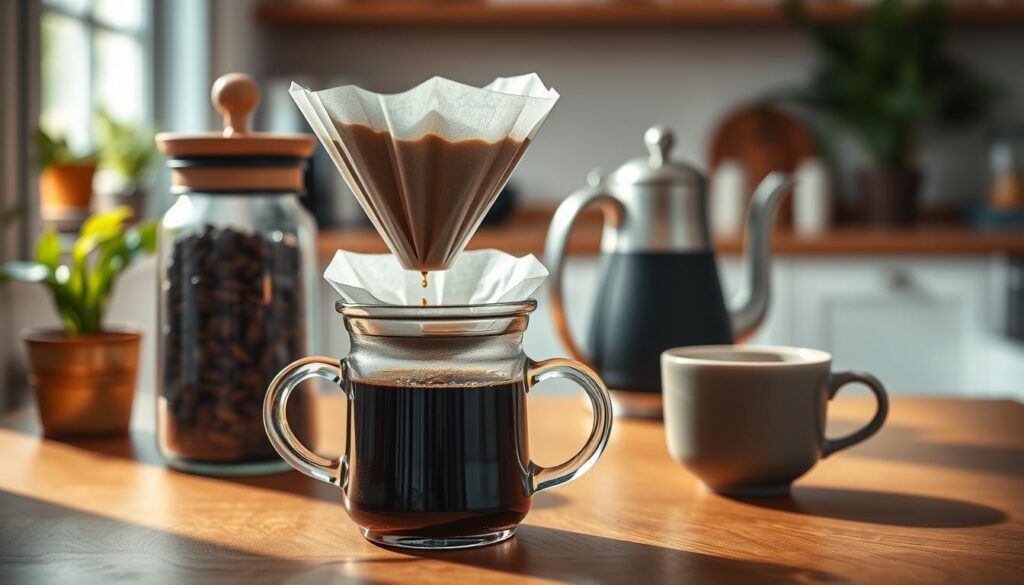
A hand-pour routine turns simple gear into a precise tool for clearer flavor. Pour-over coffee is a catchall term for handmade brews where hot water passes through grounds and a filter into a cup or carafe. You do the timing and flow instead of an automatic machine.
What it means compared with drip and immersion
Drip machines automate flow and timing. That makes them convenient, but they limit control over strength and extraction.
Immersion methods like french press hold grounds in water for a fuller body. They often yield richer, heavier texture while pour-over highlights clarity and distinct notes.
What you control at home
With a steady hand and simple steps you control flavor, strength, and freshness. Choose a conical brewer (V60, Chemex) for extra clarity or a flat-bottom device (Kalita Wave) for consistency.
The promise is repeatability: a consistent process plus fresh beans equals better quality in every cup.
Equipment and ingredients to set up for a perfect cup
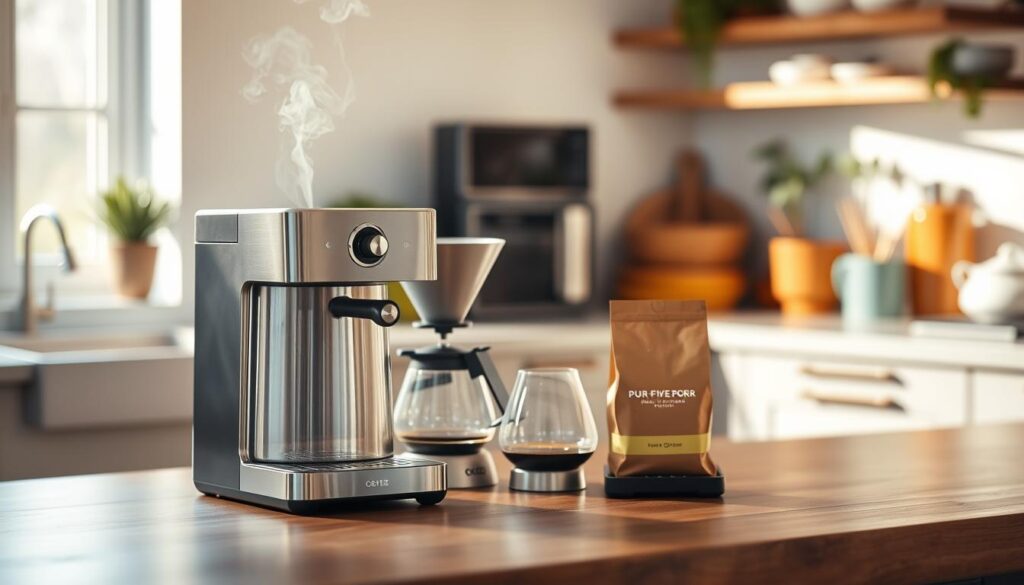
Good results start with clear gear choices. Pick a coffee maker that matches the cup you like: bright and clear, clean and bold, or steady and even.
Choosing a brewer
V60 and Chemex favor clarity; they highlight single-origin character. Kalita Wave gives even extraction for a stable result. Melitta works well for beginners who want a familiar profile.
Filters and rinsing
Paper filters trap oils and fines. Rinse a new filter with hot water, discard the rinse, and warm the brewer. Rinsing removes papery taste and helps consistent flow.
Kettles and pouring control
A gooseneck kettle slows and aims pouring water. That control prevents channeling in the bed of grounds and helps you time pulse pours.
Grinder basics
Burr grinders give steady particle size and repeatable results. If you use a blade grinder, pulse in short bursts and shake between pulses to reduce uneven chunks.
- Must-haves: a digital scale, reliable kettle, and a consistent grinder.
- Keep whole beans fresh and grind right before brewing for best aroma.
| Brewer | Typical Result | Filter Type | Best For |
|---|---|---|---|
| Hario V60 | Bright, clean cup | Thin paper | Single-origin clarity |
| Chemex | Very clean, rounded | Thick paper | Large batches, smooth body |
| Kalita Wave | Consistent, balanced | Flat-bottom paper | Reliable daily brewing |
| Melitta | Classic, approachable | Standard paper | Easy, familiar profile |
how to make pour over coffee step by step
Start with a simple, measured workflow that keeps results predictable and easy to tweak. Below is a compact, numbered sequence using grams for repeatable results. Use the example recipe and adjust one variable at a time.
-
Pick a ratio that fits your taste
Begin at 1:16 (example 20g coffee to 320g water). Move toward 1:14 for a stronger cup or 1:20 for a lighter brew.
-
Heat water for your roast
Light roast: 195–212°F. Medium: 185–200°F. Dark: 175–190°F. If the kettle reaches a full boil, let it rest briefly before use.
-
Measure grams and set grind
Weigh 20g of whole beans, grind medium to medium-fine for most brewers. Consistent particle size matters more than exact setting.
-
Prep filter and brewer
Rinse the paper filter with hot water to remove paper taste and warm the server. Discard rinse water before adding grounds.
-
Level the bed
Add the ground coffee and gently shake or tap the brewer so the coffee bed sits even. This prevents fast channels and uneven extraction.
-
Bloom the grounds
Pour about 3× the coffee weight (for 20g, use ~60g water) and fully saturate. Wait 30–45 seconds while bubbles slow and gases escape.
-
Main pours and pouring pattern
After bloom, add the remaining water in two pours (example 130g + 130g). Start center, spiral outward, and avoid aiming at the filter wall.
-
Pulse versus continuous
Pulse (3–4) gives control and works for many brewers. Continuous pours suit slower-flow devices like V60 or Chemex with fine grind or thick filters.
-
Target brew time and drawdown
Aim for about 2:45–3:30 total brew time. Fast drawdown means coarser grind or light dose; slow drawdown suggests finer grind or tighter bed. Taste for balance, sweetness, and clarity.
| Action | When to use | Effect |
|---|---|---|
| Pulse pours | Typical brewers, medium flow | Better control, even extraction |
| Continuous pour | Slow-flow setups (V60/Chemex) | Smoother drawdown, steady flow |
| Adjust ratio | Dialing strength | 1:14 stronger, 1:20 lighter |
Finish by noting what you expect in the cup: clear flavor notes, balanced sweetness, and no harsh bitterness. You will use these observations in the next section when dialing in flavor.
Dialing in flavor: variables that change strength, body, and taste
Simple tweaks in grind, water, and timing let you shape strength and clarity with confidence.
Grind size and brew time
Use brew time as the first diagnostic. If the drawdown finishes near 2 minutes, your grind is likely too fine; slow it by coarsening the particle size. If it drags near 5 minutes, go finer to increase extraction.
Water temperature and taste
Higher temperature pulls more soluble material and can reduce sour notes. If a cup tastes bitter or smoky, lower the temperature within the roast’s safe range.
Agitation and bed control
Gentle swirling after each addition levels the bed and improves saturation. One light stir can rescue under-extracted pockets, but avoid heavy agitation that forces excess bitterness.
Scaling pours and grams-based rules
Keep the 1:16 framework when changing batch size. For doses above ~24g, split remaining water into three pours for even extraction. Note grams, brew time, and water steps so repetition becomes reliable.
- Change one variable at a time: grind, temperature, agitation, or ratio.
- Under-extracted = sour or thin; try finer grind or warmer water.
- Over-extracted = bitter or drying; try coarser grind or lower temperature.
| Variable | Effect | Quick fix |
|---|---|---|
| Grind size | Controls flow and extraction | Adjust coarser or finer, test minutes |
| Water temp | Changes extraction rate | Lower for bitterness, raise for sharpness |
| Agitation | Improves saturation, raises extraction | Swirl gently; stir sparingly |
Make every pour-over better next time
Consistency at each stage—beans, grind, water, and filter—yields clearer, repeatable flavor. Start with fresh, whole beans and grind just before brewing to protect aroma and quality.
Use a short checklist: clean gear, the same filtered water source, a warm brewer, and a stable recipe. Keep notes for each cup: dose, total water, filter type, grinder setting, and a quick taste rating so patterns emerge fast.
Brew only the cups you need, discard grounds promptly, and rinse the server so old oils don’t taint future cups. For a compact upgrade path, add a scale and a gooseneck kettle, then consider a better grinder later.
Set one goal for your next attempt: aim for a clean, balanced cup and change only one variable. For a full step-by-step guide, see step-by-step guide.