how to grind coffee beans
The taste of fresh brewed cups starts before hot water touches the grounds. Whole beans hold natural oils and aroma much longer than pre-ground options. Grinding triggers quick oxidation, moisture exposure, and loss of carbon dioxide, which dims flavor in hours.
This short guide previews a repeatable, step-by-step process for common U.S. methods: drip, pour-over, French press, espresso, and cold brew. You’ll learn which beans to pick, which grinder fits your needs, and how grind size matches each brew style.
Key decision points remove guesswork: pick quality beans, match grind texture (think table salt, sand, sea salt), and keep dose and brew time consistent. Consistency is the main driver of better flavor at home.
The full article adds a practical grind size chart, a no-grinder blender workaround, and basics for dialing in espresso. Freshly ground coffee usually tastes brighter and more aromatic than grounds that have been sitting around.
Why freshly ground coffee beans taste better
Freshly broken surfaces release the scents that define a great cup. Grinding creates more surface area, and that exposure speeds the loss of volatile aromatics.
Oxidation and carbon dioxide loss
When beans are crushed, oxygen meets fragile compounds. Aromatic molecules evaporate faster, so flavor and aroma flatten with time.
Carbon dioxide also escapes more quickly after crushing. CO₂ helps carry oils into the brewed cup, so its depletion weakens perceived flavor intensity.
Moisture and kitchen odors
Ground coffee absorbs humidity. Water in the air dissolves oils and mutes bright notes.
Oils on fresh grounds pick up nearby smells — spices, frying scents, or garlic — which can show up as off-flavors in the cup.
- Grind right before brewing when possible for peak freshness.
- If pre-grinding is necessary, shorten the time between milling and brew.
- Better control of this process yields clearer notes and quality coffee without stale or odd tastes.
For more on why freshly ground matters, read this short primer: why freshly ground makes your brew.
Choose the right coffee beans before you grind
Choosing the right beans sets the stage for every cup before any equipment is touched.
Roast level and extraction behavior
Light roasts are denser and resist extraction a bit more. They often benefit from a slightly finer setting to unlock bright flavor.
Dark roasts are more brittle and break apart easier. That can cause static and clumping, which makes extraction uneven and alters taste.
Freshness basics: roast date and peak window
Look for a printed roast date and buy recent batches. Freshness peaks within about a month, and often sooner for espresso.
For most households, buy smaller bags more often. Use a bag within its peak window to keep aroma and quality high.
Origin and flavor profiles
Latin American origins tend to be balanced, mild, and often nutty or fruity. African origins usually give brighter, floral, or citrus-forward flavors.
Pick origin and roast that match your taste goals. The right choice yields clarity in extraction, balanced cup flavor, and an aroma you enjoy.
- Buy small amounts and note origin, roast, and taste with your brewing method.
- Track what worked so you can repeat favorites and improve your brewing experience.
Picking a coffee grinder that matches your brewing methods
Picking the right grinder makes the difference between a flat cup and one that sings with clarity. The machine must deliver repeatable particle size so water extracts evenly across the bed.
Burr grinder vs. blade grinders: consistency, heat, and flavor retention
Burr systems crush beans between two surfaces, producing uniform particles and adjustable grind size. That consistency reduces bitter and sour swings in the same cup.
Blade grinders chop unevenly and create fines plus boulders. They can also heat the roast, which risks volatilizing aromatics and lowering flavor retention.
Manual vs. electric grinders: budget, speed, and control
Manual burr grinders are affordable and give precise control for small batches. They are slower but excellent for single cups or travel.
Electric burr grinders save time for daily, multi-cup routines. Higher-end electric models add finer steps, less static, and quicker, repeatable settings.
| Use case | Recommended grinder | Why |
|---|---|---|
| Occasional pour-over | Manual burr | Low cost, good consistency |
| Daily multi-cup | Entry electric burr | Speed and repeatable settings |
| Espresso and prosumers | Premium burr | Precise control, minimal heat |
Even with the best grinder, dialing in grind size and dose remains necessary for consistent results.
How to grind coffee beans at home without guesswork
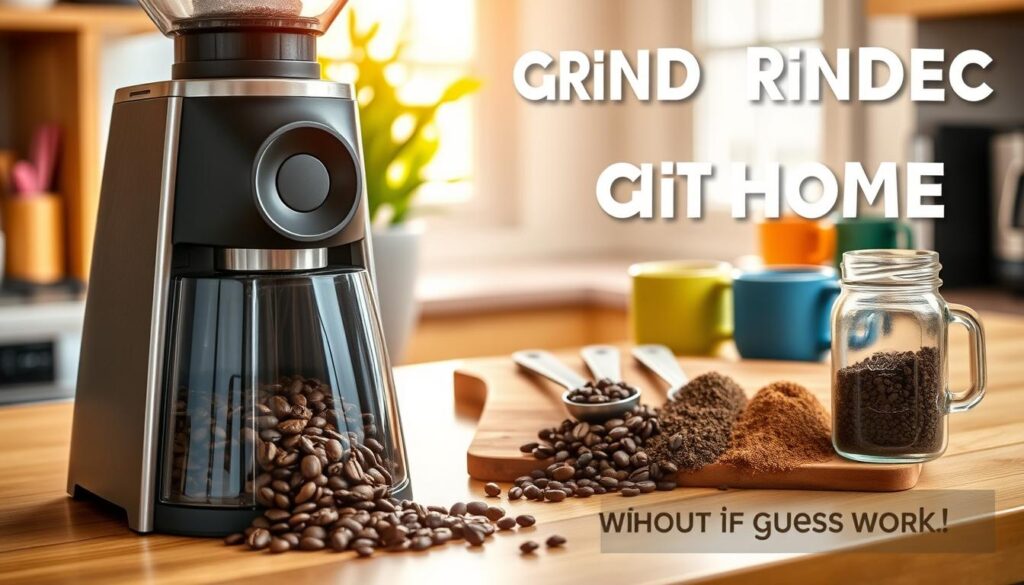
Small, repeatable steps deliver more consistent flavor than random adjustments. Follow a short workflow and you’ll cut trial-and-error each morning.
Measure with a scale for repeatable results
Weighing dose beats scoops. Use a digital scale and note grams for each brew.
Start espresso at 18–20 g for a double. For pour-over, try 14–16 g per 8 oz of water and adjust from there.
Set the size based on brewing method
Finer for pressure methods, coarser for long immersion. Match your setting before milling.
Grind in short bursts to avoid overheating
Use short runs on a burr grinder and avoid large batches. Heat dulls aroma and harms extraction.
Check consistency and tweak one step at a time
Look for even particle texture. If the cup tastes sour or weak, move one finer click. If bitter, shift one coarser click while keeping dose steady.
Brew immediately for best flavor
Use grounds right away to preserve CO₂ and aroma. Freshly made grounds give the brightest cup.
| Brew style | Starting dose (g per 8 oz) | Suggested grind |
|---|---|---|
| Espresso | 18–20 | Extra-fine |
| Pour-over / Drip | 14–16 | Medium |
| French press / Cold brew | 16–20 (adjust) | Coarse |
Grind size chart for popular brew styles in the U.S.
A clear grind-size map removes guesswork and speeds consistent results.
Use the chart below to match particle texture with common brewing methods. Feel and look guide quick adjustments without a lab scale.
Extra-fine to fine: Turkish and espresso
Extra-fine (powdery) suits Turkish style. Fine (table-salt) fits espresso — firm but not dusty. Pressure-based extraction needs uniform, compact particles for proper puck resistance and crema.
Medium-fine to medium: pour-over, AeroPress, drip
Medium-fine gives clarity and controlled flow for pour-over and AeroPress. Medium (sand-like) is a safe start for most drip brewers and balances contact time with extraction.
Medium-coarse to coarse: Chemex, French press, cold brew
Chemex often prefers a slightly coarser texture than standard drip. Coarse (sea-salt) prevents sludge in a French press and limits over-extraction during long steep times for cold brew.
- If water stalls in a pour-over, make the particles coarser.
- If drip tastes weak, move a notch finer.
- If a French press is bitter, coarsen and shorten steep time.
| Brew style | Texture cue | Quick tip |
|---|---|---|
| Espresso | Fine (table salt) | Adjust by clicks for 25–30s extraction |
| Pour-over / AeroPress | Medium-fine | Clarity and steady flow |
| Drip / Chemex | Medium / Medium-coarse | Open flow, less fines |
| French press / Cold brew | Coarse (sea salt) | Reduce sludge, avoid over-extraction |
Remember: finer increases resistance and extraction; coarser speeds flow and lowers extraction. Record your setting number or clicks for each method so your morning cup is repeatable.
How to grind coffee beans in a blender (when you don’t have a grinder)
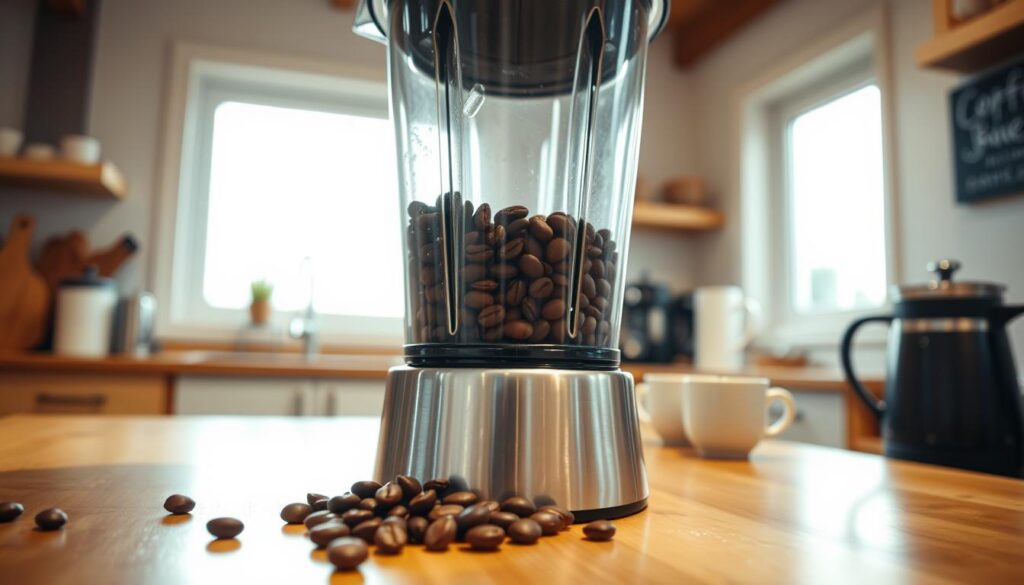
A quick kitchen blender can make usable grounds when a burr grinder is out of reach.
Pulse technique and batch control
Work in small batches and never fill the jar more than halfway. Smaller loads yield more even particle size.
Use short pulses on low speed. Pulsing reduces heat and lowers the chance of turning part of the batch into dust while leaving large pieces untouched.
Gently tilt or rock the jar between bursts. That helps move whole beans toward the blades for better circulation and a more uniform result.
Stop, check, and set expectations
Pause every few pulses and inspect the texture. Aim for the closest match to your brew rather than chasing perfect uniformity.
A blender mimics blade grinders, so expect less consistency than a burr grinder. Compensate by choosing methods tolerant of mixed particle sizes, such as drip or French press.
Cleaning tips to protect flavor
- Rinse immediately after use to remove loose grounds.
- Wash with hot water and a drop of dish soap to lift oils clinging to plastic and gaskets.
- Dry fully before storing to prevent lingering smells in later recipes.
Dialing in espresso grind size for balanced extraction
Every click on the grinder shifts flow, which quickly reshapes an espresso shot’s balance.
Fine versus too fine: avoiding sour shots and bitter over-extraction
Espresso is the most grind-sensitive brewing method because tiny changes alter pressure and flow. A small shift can flip a shot from sweet to sour or bitter.
Target a fine but not powder texture. The feel should be slightly gritty, not dusty, so water moves evenly through the puck.
Too coarse gives under-extraction: thin, sour, and weak cups. Too fine causes over-extraction: harsh bitterness and slow or stalled flow.
Use extraction time and taste to tune your grinder setting
Begin with an 18–20 g dose and aim for about 20–30 seconds for a double yield near 1:2. Time is a reliable diagnostic when dose and yield stay constant.
- If the shot finishes too fast and tastes sour, make the grind slightly finer and test again.
- If it drags, tastes bitter, or chokes, coarsen the setting one small step and retest.
- Change only one variable at a time—dose, yield, or size—so results are meaningful.
Use a scale and a quality burr grinder when possible; uniform particles make dialing far easier and more repeatable. Track settings and taste notes until the cup shows balanced sweetness, pleasant bitterness, and clear flavor.
Keep your grounds fresh and your results consistent every time
Simple storage choices make a big difference in the taste you get each morning.
Freshness hierarchy: whole beans last longest. Once you create ground coffee, staling accelerates. Minimize exposure to air, light, moisture, and odors to keep aroma and flavor strong.
Storage protocol: use an airtight, opaque container and stash it in a cool, dark pantry. Avoid the refrigerator or freezer — temperature swings and odors pull in moisture and ruin aroma.
Buy amounts you will finish within the roast’s peak window and grind only what you will brew that day for the best cup coffee experience.
For consistency, weigh dose, follow the same recipe, and note your grinder setting numbers. If a cup tastes off, check bean freshness, grind setting drift, dose, then brew time.
Clean grinders and containers regularly to stop oil buildup. With fresh beans, a steady grind, and repeatable brewing, you can make better-tasting coffee at home every time.