how to clean cuisinart coffee maker
The goal here is simple: show exactly how this guide helps you get better-tasting coffee and steady performance from your Cuisinart at home in the United States.
Many models include a Clean or Self Clean indicator that signals when internal descaling is needed. You will follow one of two paths depending on your model: use the built-in cycle, or run a manual vinegar descaling when that button is absent.
Cleaning covers two tasks. First, descale the interior where mineral scale collects. Second, wash removable parts like the carafe, lid, and filter basket where oils and grounds build up.
White distilled vinegar (5% acidity) mixed with water dissolves mineral deposits and oils. The process usually takes about a half hour plus rinse cycles. Rinsing is key so the next pot does not taste like vinegar; expect two or three fresh-water runs.
Regular upkeep cuts clogs and helps the machine keep steady flow and temperature for better extraction. Short supplies and clear steps mean this is an easy routine to keep your brewer reliable.
Why cleaning your Cuisinart coffee maker matters for taste, flavor, and performance
Small deposits inside a brewer can mean big losses in taste and performance. Over time, buildup from heated water and minerals forms on tubing, the heating element, and in the reservoir pathways. This scale restricts flow and reduces heat transfer.
Mineral deposits and where they collect
Hard water leaves calcium and lime that cling to internal parts. Scale narrows passages and makes the unit run longer to reach brew temperature. Uneven flow leads to under‑extraction or over‑extraction, which alters flavor and can make a cup taste weak or metallic.
Oils and leftover grounds that harm flavor
Natural oils from beans cling to baskets and inner surfaces. Old coffee grounds and trapped oils oxidize and turn rancid. That creates bitter, stale notes even when fresh beans are used.
What the clean light actually signals
The clean light means residue and scale have reached a level that affects performance. You may also notice slower brews, gurgling sounds, lower heat, or off tastes before the light appears.
Daily washing of removable parts and periodic deep descaling protect flavor and extend life. The next section covers the simple vinegar and water solution and prep steps that reset the clean light.
| Task | Frequency | Targets |
|---|---|---|
| Daily washing | After each use | Carafe, lid, filter basket |
| Deep descaling | Every 1–3 months | Reservoir, tubes, heating element |
| Filter care | Weekly | Permanent filter, water filter |
What you need before you start: white vinegar, water, and a clean setup

Start with a few simple items and a clear workspace before any descaling run. This avoids paused cycles and ensures the solution flows freely through the system. Proper prep saves time and prevents residue from recirculating.
Recommended vinegar-water mixture ratios
Use white vinegar (distilled, ~5% acidity) mixed with water for best results. A common mixture is one part vinegar to two parts water. That ratio scales up with larger reservoirs.
Prep checklist
- Minimal supplies: white vinegar, clean water, empty carafe, soft cloth.
- Safety first: unplug the unit, let it cool, and empty the water reservoir fully.
- Remove grounds and make sure the filter basket is empty so the cycle cleans internal tubing, not old residue.
When to remove filters
Take out permanent filters and wash them separately. Remove any charcoal or water filter from the water reservoir before running the solution so it won’t saturate or be damaged.
| Ratio | When to use | Effect |
|---|---|---|
| 1:2 (vinegar:water) | Routine descaling every 1–3 months | Safe, effective removal of light scale |
| 1:1 | Heavy build-up or repeat clean light | Stronger solution for stubborn deposits |
| 1:4 | Light maintenance or sensitive parts | Milder solution, less odor |
Follow this prep and ratio guidance as the next step in your plan for clean cuisinart performance.
how to clean cuisinart coffee maker using the self-clean cycle
Begin the automated cleaning cycle by pouring the vinegar-water solution into the reservoir and placing the carafe beneath the brew head.
Fill the reservoir and position the carafe
Mix one part white vinegar with two parts water and pour that solution into the unit’s reservoir. Place the empty carafe on the warming plate so all liquid is collected during the run.
Start the Self Clean or Clean mode
Plug the machine in, press the Self Clean/Clean button (or press-and-hold if required), and select Full Pot if prompted. The machine begins an automated cleaning cycle that pushes the solution through internal tubing and the heating element.
Cycle timing, end signals, and rinse steps
Expect the cycle to run for about 30 minutes; the clean light stays on while the cycle runs. Many models beep several times (sometimes five beeps) when finished. Empty the carafe, refill the reservoir with fresh water, and run at least two full brew cycles to remove vinegar taste and odor.
Troubleshooting a persistent blinking light
If the clean light keeps blinking after rinses, repeat the cleaning cycle with a fresh solution and then run extra rinses. A power reset can help clear the indicator. Using filtered water going forward reduces scale and supports optimal performance.
Manual cleaning process for Cuisinart coffee makers without a self-clean button
If your model lacks a Self Clean button, a manual descaling routine will restore flow and taste. This process helps owners of older or basic coffee makers follow a reliable path for scale removal.
- Prepare a vinegar solution by mixing one part white vinegar with two parts water. Pour the mix into the reservoir.
- Run a full brew cycle so the solution moves through internal tubing and the heating element like a normal brew.
- When brewing finishes, let the hot liquid sit in the carafe for about 30 minutes. Extra contact time loosens mineral deposits and softens scale.
After the wait, discard the solution and rinse the carafe and reservoir with fresh water. Then run at least two full water-only cycles until no vinegar smell remains. If the first rinse still smells sharp, run another plain cycle rather than brewing beans right away.
This manual process does not replace daily washing of removable parts. Regular washing of the carafe, lid, and filter basket keeps oils and grounds from affecting flavor between descaling sessions.
| Task | When | Purpose |
|---|---|---|
| Vinegar brew | Every 1–3 months | Remove mineral scale |
| Sit time | 30 minutes | Improve descaling effectiveness |
| Flush cycles | 2+ water runs | Remove odor and residue |
After-brew cleaning that keeps your coffee maker fresh day to day
A few minutes after each brew can stop oils and old grounds from souring the next pot. Daily care keeps flavor bright and reduces how often deep descaling is needed.
Wash the carafe, lid, and filter basket with warm soapy water and dry thoroughly
Discard used coffee grounds right away. Rinse the filter basket under running water so grounds do not stick and cause odors.
- Wash the carafe and lid with warm soapy water using a non-abrasive sponge. Rinse well so no soap film remains.
- Clean the filter basket the same way. Pay attention to seams and the underside where oils collect.
- Dry pieces with a lint-free towel or let them air-dry completely so moisture won’t cause musty smells or residue.
- Wipe the exterior and any splashes near the warming plate with a soft, damp cloth so sticky spills don’t bake on.
Regular cleaning of these parts prevents stale notes from old coffee grounds and keeps each cup consistent. Follow this simple routine after each use and your cuisinart coffee maker will need deep cleaning less often.
| Task | When | Why |
|---|---|---|
| Discard grounds | After every brew | Prevents sour, bitter flavors |
| Wash carafe & lid | After every use | Removes oils and soap film risk |
| Rinse filter basket | After every brew | Keeps seams and underside free of residue |
When the Clean light won’t turn off: fixes that work before you call support
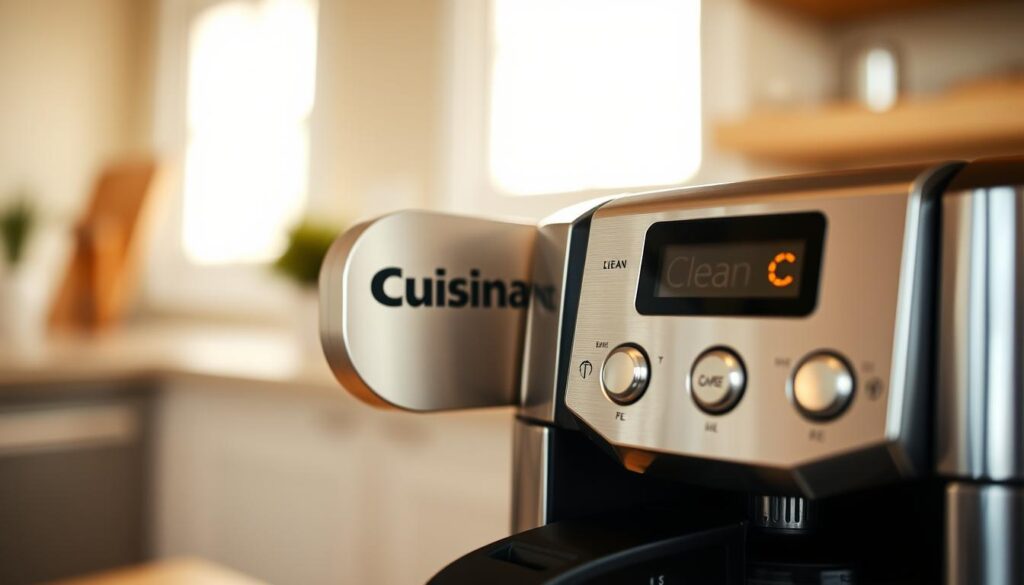
A stubborn clean light usually means the cycle didn’t fully clear internal lines. Start with simple steps that restore normal flow, remove vinegar odor, and get the machine back to regular performance.
Complete the cleaning process with extra rinse cycles and a power reset
Run two to three full rinse cycles using fresh water only. Do not add vinegar. Each cycle forces water through tubes and the heating element and flushes leftover solution.
- Fill the reservoir with fresh water and run a full cycle.
- Repeat twice more, emptying the carafe each time.
- If the light remains on, unplug the unit for 60 seconds, plug it back in, then run one more water-only cycle.
Extra flush trick for certain single-serve style units
On some Cuisinart SS single-serve models, press the 8oz and 6oz buttons at the same time. This dispenses a stronger stream that can clear pockets of vinegar or loosened scale.
The burst of flow reaches areas a normal cycle may miss and often clears the indicator. If the light still blinks after repeats and resets, contact Cuisinart support for model-specific guidance.
| Action | Expected result | When |
|---|---|---|
| Extra rinse cycles | Removes residual solution and odor | Immediately after descaling |
| Power reset | Clears stuck indicators | After rinses fail |
| 8oz + 6oz flush | Force-clears tubing pockets | Single-serve SS models |
Keep your Cuisinart coffee makers running like new with a simple maintenance rhythm
Keep a predictable maintenance rhythm and your Cuisinart will reward you with steady performance and better taste. Aim for short daily rinses of removable parts, plus deeper descaling on a schedule based on water hardness and use.
Descale every 1–3 months for hard water or heavy use, and about every 4–6 months for lighter use. Using filtered water and replacing any charcoal reservoir filter about every 60 days (or ~60 uses) reduces mineral build-up and preserves cup coffee flavor.
Watch for signs between sessions: slower brew time, odd noises, lower brew temp, or a dull taste. Mark maintenance on your calendar so routine upkeep wins over emergency fixes.
Quick final check after any maintenance: no vinegar odor, the clean light is off, and the first brewed cup coffee tastes balanced. For descaling products and options, see descaling solutions.