
does coffee have fiber
Yes — the short answer is that brewed coffee contains a small but measurable amount of dietary fiber. The total per serving is low, yet lab tests of espresso, filtered drip, and freeze-dried instant show real soluble material that counts as fiber.
Most people do not link this drink to fiber. That makes the finding notable because fiber intake is a common nutrition gap in the United States. Since many Americans drink a cup each day, even small contributions can add up.
This article will summarize research results, identify the type of soluble fiber present, estimate how much is in a typical cup, and explain effects on daily totals. It will also show how brew style—espresso, drip, or instant—changes the amount.
The tone is evidence-led and practical. Expect clear data and simple takeaways: this beverage can supply a bit of daily fiber, but it won’t replace whole grains, beans, fruits, and vegetables.
Does Coffee Have Fiber? What the Research Says About Your Cup
Scientists measured soluble residues in espresso, drip, and freeze-dried instant and found that brewed drinks do carry small amounts of plant solids from grounds into the mug.
Coffee beans vs. brewed coffee: why the difference matters
Most people know whole coffee beans contain plant material, but few eat the beans themselves. Brewing is an extraction process that pulls some soluble compounds from grounds into the liquid, so the question is what transfers into brewed coffee.
What researchers found when testing espresso, drip, and freeze-dried coffee
Food scientists Fulgencio Saura-Calixto and Elena Díaz-Rubio (Spanish National Research Council, Madrid) ran a careful study published in the Journal of Agricultural and Food Chemistry. They used enzymes to break apart molecules, removed the water, and analyzed the remaining solids.
- All three preparation styles showed measurable dietary fiber content.
- Measured levels ranged from 0.47 to 0.75 g per 100 ml, giving real numbers rather than guesses.
- The comparison across espresso, drip, and instant reflects how people commonly drink coffee in the U.S.
These findings challenged the idea that brewed beverages have no fiber and set up the next topic: what type of fiber—mainly soluble—actually moves from grounds into the cup. For more background, see a readable summary at need fiber? have some coffee.
What Kind of Fiber Is in Coffee: Soluble Fiber vs. Insoluble Fiber

Most brewed cups carry mostly soluble material from grounds into the drink, not the bulky plant parts left behind in the filter.
How soluble material behaves in water and digestion
Soluble fiber dissolves in water and can swell into a gel. In the gut, that gel slows digestion and can help regulate blood lipids and glucose.
Where the hard-to-dissolve part fits in
Insoluble fiber stays in the solids. It provides bulk and supports regular bowel movements, like bran or raw vegetables do.
How the brewing process moves material into the cup
Hot water, contact time, grind size, and filtration determine what passes into the mug. Finer grinds and longer contact let more soluble compounds transfer. Filters trap most insoluble parts.
- Soluble vs. insoluble: different roles for the body.
- Brew choices change how much of each part ends up in your drink.
- Expect modest dietary benefit; whole foods supply the bulk.
| Characteristic | Soluble | Insoluble |
|---|---|---|
| Behavior in water | Dissolves, forms gel | Does not dissolve, stays solid |
| Role in body | Slows digestion, supports cholesterol control | Adds bulk, aids bowel movement |
| Likely in cup | Yes — small amounts transfer | Mostly remains in grounds |
Coffee Fiber Content by Type: Espresso, Brewed Coffee, and Instant Coffee
Measured lab work shows brewed drinks carry modest amounts of soluble plant solids into the cup. The study range was about 0.47–0.75 grams per 100 milliliters, a useful baseline for comparing styles.
- Espresso: ~1.5 grams per small cup — concentrated extraction raises soluble transfer.
- Filtered drip: ~1.1 grams per typical cup — paper filters and brew ratio reduce solids.
- Freeze-dried instant: ~1.8 grams per cup — industrial, high‑temperature extraction can yield the most.
Roast level, grind size, Arabica vs. Robusta, and decaf vs. caffeinated choices can nudge content up or down. Still, brew style drives the largest differences. Treat these numbers as estimates; brand and serving size vary.
| Type | Measured (g/100 ml) | Approx. grams per cup |
|---|---|---|
| Espresso | 0.47–0.75 | ~1.5 g |
| Filtered drip | 0.47–0.75 | ~1.1 g |
| Freeze‑dried instant | 0.47–0.75 | ~1.8 g |
Next, we’ll turn these estimates into daily intake math for people who drink multiple cups per day.
How Much Fiber Can Coffee Add to Your Daily Fiber Intake?
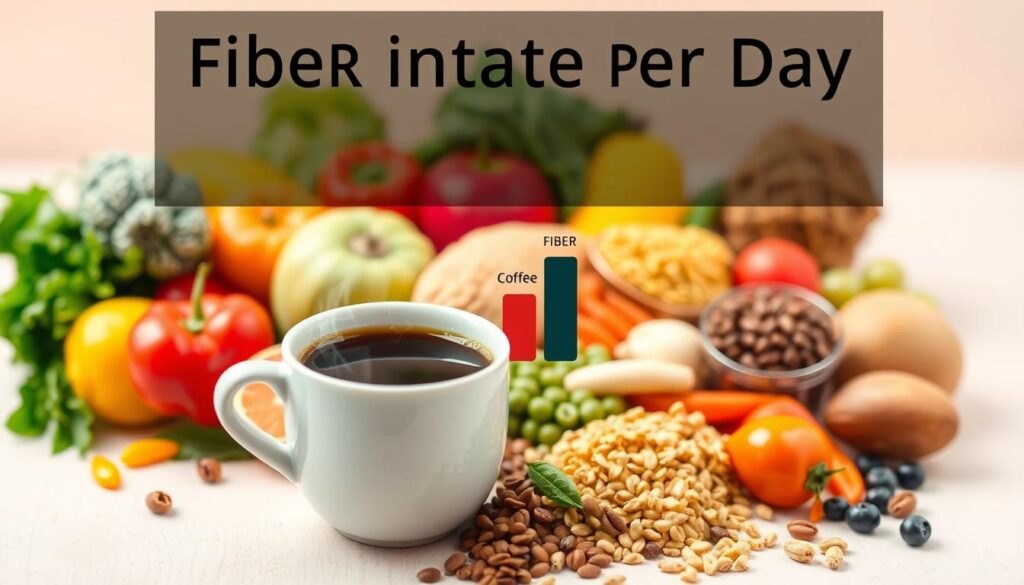
Even small amounts per serving can add up over a day for regular drinkers.
Daily targets and quick comparison
The ADA benchmarks are about 38 grams per day for men and 25 grams per day for women. These targets help people judge how much extra intake they need from all sources.
Real-world math with an 8-ounce cup
An 8-ounce cup can supply roughly 1.5 grams. Multiply by the U.S. average of 3.2 cups per day and the total approaches 5 grams, a useful bump toward daily grams.
- One 8-ounce cup ≈ 1.5 grams.
- 3.2 cups/day ≈ 4.8–5 grams total.
- Serving sizes larger than 8 ounces raise the amount and caffeine at the same time.
| Metric | Per 8-oz cup | Typical 3.2 cups/day |
|---|---|---|
| Amount (grams) | ~1.5 g | ~4.8–5 g |
| Role | Small source | Supplemental to meals |
| Health note | Helps digestion | Not a primary source |
Experts warn against using this drink in place of whole-food sources like beans, whole grains, fruits, and vegetables. Increasing cups for intake also raises caffeine, which can affect sleep and anxiety. The next section looks at those tradeoffs for health.
Health Benefits and Tradeoffs: Gut Health, Heart Health, Caffeine, and Risk
Research links routine drinking to a mix of health benefits and tradeoffs. Some compounds in the cup, including soluble plant residues and bioactive molecules, may aid gut motility and digestion. Caffeine adds a separate, faster stimulant effect that can speed bowel transit.
Reduce-risk signals and major findings
The strongest reduce risk signal is consistent evidence that habitual caffeinated consumption lowers type 2 diabetes risk. Other observational studies suggest lower Parkinson’s incidence, but these are suggestive, not proof.
Cardiovascular and bone tradeoffs
Cardiovascular results are mixed: some studies show benefit, others show neutral or increased risk depending on dose and preparation. Long-term high consumption—over three cups daily for years—has been linked in some reports to faster bone mineral loss.
Caffeine load and practical guidance
Higher intake raises overall caffeine load (~100 mg per cup on average), which can hurt sleep, increase jitteriness, or affect heart rate in sensitive people. Balance benefits against personal tolerance and medical context.
| Benefit | Evidence | Risk |
|---|---|---|
| Gut support | Biological plausibility + stimulant effect | Dependence or urgency |
| Lower type 2 diabetes risk | Consistent epidemiologic signal | Not causal proof |
| Parkinson’s (suggestive) | Some studies show association | Requires more research |
Use this drink as one part of a balanced diet. Focus most intake on whole foods for steady, reliable nutrition and discuss high consumption with your clinician.
Putting It All Together: Enjoy Coffee, Then Build Fiber With a Fiber-Rich Diet
Your morning mug supplies a little soluble material that counts toward daily intake, typically about 1–2 grams per cup depending on types and brew.
Use that contribution as a small extra, not the main dietary source. Prioritize whole food sources — whole grains, beans, fruits, vegetables, and nuts — for meaningful gut and metabolic benefits.
Practical steps: pair a cup with oatmeal or berries at breakfast, add beans or veggies at meals, and drink water for comfort. If you increase cups to chase totals and notice sleep or jitter problems, scale back and shift focus to meals.
In short, this drink can fit in a healthy routine, but long‑term intake should be built from varied, fiber‑rich food choices.