does matcha have more caffeine than coffee
We start with a simple question: what does “more” mean here? It can mean per cup, per gram, or per a typical café drink. Defining this helps frame the comparison so numbers make sense.
Quick preview: powder made from whole green tea leaves often lands in a similar caffeine range to brewed beans, depending on serving size. A standard powdered scoop can pack a strong dose, while café portions vary a lot.
Expect variability: U.S. cup sizes, home mugs, and café recipes change totals fast. The powdered leaf also delivers L-theanine, which can make the energy feel steadier than an espresso shot.
What you will get in this guide: concise numbers, why they shift, how each beverage is prepared, and tips for choosing energy and focus now. Safety and guidance for sensitive groups, including FDA and pregnancy notes, follow in later sections.
Read a deeper comparison and data source here.
Matcha vs. coffee caffeine at a glance
Let’s look at head-to-head numbers for a standard prepared drink so you can see typical totals and why they shift.
Typical caffeine per cup: quick figures
A common 2 g serving of green tea powder is roughly 64 mg of caffeine, though tests report a range from about 38–88 mg per 2 g.
Drip brewed beans often average near 95 mg per cup, but single‑serving sizes and brewing recipes change that number a lot.
Why serving size drives the result
- “Per cup” here means a prepared drink as you sip it, not raw powder weight.
- Doubling grams of powder or ordering a larger café size can flip which drink delivers more total stimulant.
- Two small servings across a morning may equal one large serving in daily totals.
| Drink | Typical serving | Common range |
|---|---|---|
| Green tea powder (2 g) | ~64 mg | ~38–88 mg |
| Drip brewed beans (8–12 oz) | ~95 mg | Varies widely by roast and size |
Next sections unpack how the leaf and the bean are produced and why the alertness you feel can differ even when totals look close.
What matcha is and why it’s different from green tea
Think of this green tea as powdered leaves you whisk into water — you consume the whole leaf, not just a brewed infusion.
Made from whole tea leaves ground into matcha powder
High‑grade matcha powder comes from dried tea leaves milled to a fine dust. Because the leaf is eaten, a single cup can deliver a denser profile of nutrients and plant compounds than a steeped cup of green tea.
Shade-grown process and its impact on theanine and taste
Farmers shade plants before harvest to boost chlorophyll and theanine. That shift softens bitterness and brings a sweet, umami taste many people prefer. Theanine supports a calmer focus alongside the stimulant effect.
How matcha tea is prepared compared to steeped teas
Preparation is simple: sift powder, add hot (not boiling) water, and whisk until frothy. This contrasts with steeping bags or loose leaves, where water extracts compounds but the leaf is discarded.
- Whole‑leaf ingestion raises concentration per serving.
- Powder quality and freshness change flavor and compound levels.
| Attribute | Matcha | Steeped green tea |
|---|---|---|
| Form | Fine powder | Loose leaves or bag |
| Consumption | Whole tea leaves in drink | Infused water only |
| Flavor | Umami‑sweet when shaded | Light, vegetal |
| Typical prep | Whisk with hot water | Steep in hot water |
What coffee is and how caffeine gets into your cup
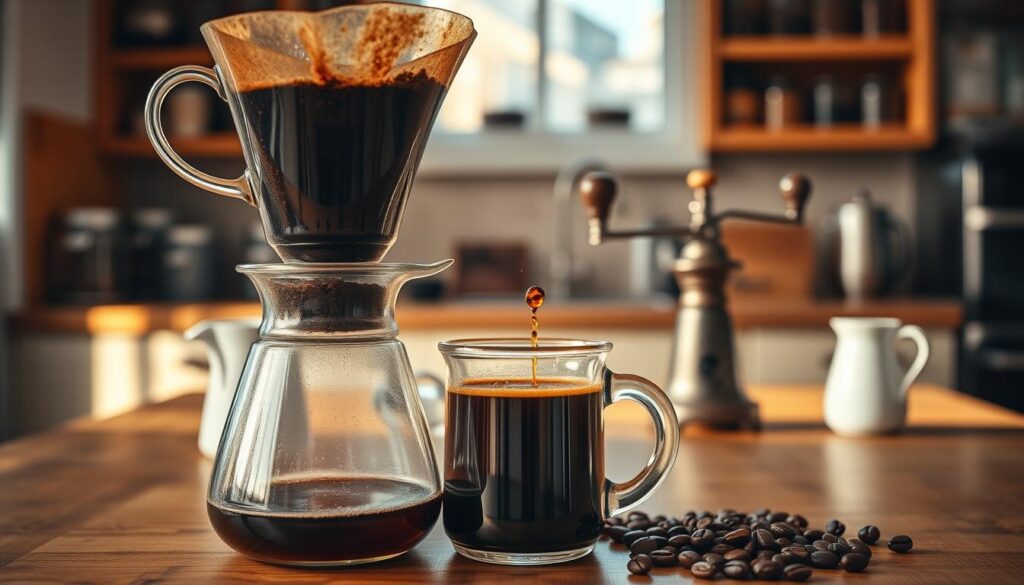
Roasted coffee beans release flavor and stimulant when hot water pulls soluble compounds into the brew. The extraction step is what moves molecules from bean to cup.
From coffee beans to grounds to brew methods
Roasted beans are ground to increase surface area. Water contacts the grounds and extracts oils, acids, and stimulant molecules. Grind size and brew time change how much moves into the drink.
Why drip coffee varies by recipe and drink size
- Grams of grounds per cup control dose; more grams raise totals.
- Brew time and water contact affect extraction percentage.
- Serving size or drink format (small mug versus large café pour) changes the final total.
- Roast style alters flavor and perceived strength, while actual stimulant content depends mainly on dose and extraction.
| Factor | Effect on cup |
|---|---|
| Grams of grounds | Directly raises extracted stimulant |
| Brew time | Longer contact extracts more compounds |
| Grind size | Finer grind increases extraction rate |
Because a “cup” can mean many sizes, comparisons require clear serving definitions in the next section.
does matcha have more caffeine than coffee
Numbers tell the story: gram-for-gram, powdered green tea is denser, but a brewed mug often ends up higher in total stimulant.
Matcha caffeine content using common serving sizes
Use ~32 mg per gram as a practical baseline. One gram gives about 32 mg, two grams roughly 64 mg, and three grams about 96 mg.
Lab ranges vary (≈19–44 mg/g), so a 2 g scoop can fall between 38 and 88 mg depending on grade and processing.
Coffee caffeine content using common U.S. cup assumptions
Whole beans average near 10–12 mg per gram. A typical home brew that uses 7–10 g grounds often yields about 60–100 mg per cup, with large café pours easily higher.
Gram-for-gram comparison: matcha powder vs coffee beans
Matcha powder often shows higher mg per gram than beans. This surprises readers because cups are sized differently.
| Item | Approx mg per gram | Typical serving | Estimated mg per serving |
|---|---|---|---|
| Matcha powder | ~32 mg/g | 2 g scoop | ~64 mg (range 38–88) |
| Coffee beans | ~10–12 mg/g | 8 g grounds (small cup) | ~80–96 mg |
| Large drip cup | — | 12–16 oz | ~120–160 mg (varies) |
How both drinks can land in a similar range
A 2 g powdered serving and a modest brewed cup often overlap (≈60–100 mg). The winner depends on grams used and cup size.
Quick rule: lower your dose to cut intake; increase grams or pick a larger mug to raise it.
Why matcha can feel stronger even with less caffeine
Sipping a powdered green cup often feels different from a brewed mug, and the why is rooted in chemistry and timing.
L-theanine and slower absorption
The powdered green leaf contains L-theanine. This amino acid slows absorption of stimulant into the body. That change alters perceived effects even at similar milligram totals.
Energy boost timing: quick kick vs steadier alertness
Drinking espresso or a strong brew often gives a fast lift. The rise can be sharp and brief.
In contrast, the green powder tends to deliver a steadier energy that many people call a cleaner energy boost. That steadiness feels like less of a spike and more sustained focus.
The crash and jitters: what users commonly notice
Rapid absorption raises the chance of jitters or a pronounced crash for some. The slower curve with the powdered leaf may reduce those reactions.
Sensitivity, food, sleep, and hydration all change the way each drink lands for a person. Stronger feeling is not always more stimulant; companion compounds shape the experience.
| Feature | Powdered green | Brewed mug |
|---|---|---|
| Onset | Gradual (steady) | Fast (quick kick) |
| Typical body effects | Calmer focus | Alert, sometimes jittery |
| Crash risk | Lower | Higher |
| Modifiers | Grade, grams, food | Strength, size, empty stomach |
What changes caffeine levels in matcha and coffee
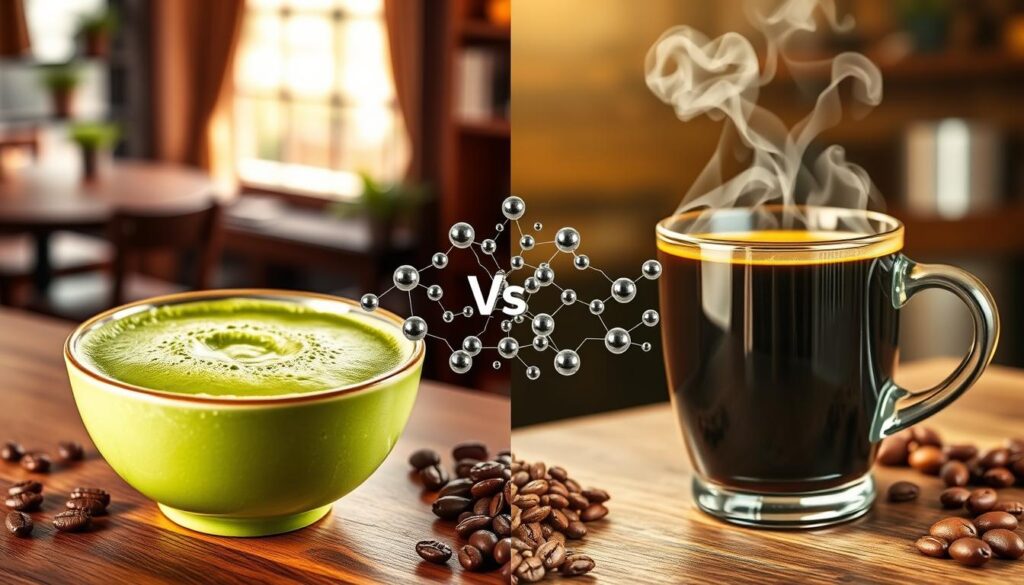
How you measure and prepare each drink determines its actual stimulant load.
Key variables for powdered green tea
The biggest levers are simple and measurable:
- Grams per serving — adding powder raises intake quickly.
- Quality and grade — higher‑grade powder often concentrates plant compounds.
- Freshness — older powder can lose potency over time.
- Water temperature during preparation — very hot water can change extraction of soluble content.
Using a scale to weigh grams per serving is the fastest way to control content. Small scooping errors matter because the powder is dense in stimulant per gram.
Main factors for brewed beans
Caffeine in brewed drinks shifts with process and format:
- Grams of grounds and brew ratio — more grounds → higher totals.
- Roast style — darker roasts taste stronger but may not yield higher stimulant per gram.
- Brew time and grind size — longer contact and finer grinds extract more.
- Drink format and serving size — a large to‑go cup can double or triple a small mug.
Taste strength can mislead. A bold flavor does not always mean higher stimulant content, especially when roast and extraction differ.
| Variable | Powdered green | Brewed drink |
|---|---|---|
| Primary control | Grams per serving | Grams of grounds / brew ratio |
| Quality factor | Grade, freshness | Roast style, bean quality |
| Preparation | Water temperature, whisking | Brew time, grind size |
| Format effect | Scoop size | Drink size (small vs large) |
To manage intake, measure dose by grams or consistent teaspoons, keep serving size steady, and note your personal response. Also remember that most other teas tend to contain less stimulant than powdered green options, which matters if you switch from one format to another.
How much caffeine is too much for most people
Most people can enjoy a few cups a day, but there is a safe ceiling to note.
FDA guidance for healthy adults
The U.S. Food and Drug Administration recommends up to about 400 mg per day for most healthy adults. Individual tolerance varies, so some will feel effects at lower totals.
Pregnancy guidance from ACOG
The American College of Obstetricians and Gynecologists suggests aiming for 200 mg per day or less during pregnancy. Talk with your clinician about personal risks and any health conditions.
How typical combinations add up
Below are realistic examples to show how multiple drinks can reach those limits.
| Daily scenario | Example items | Estimated total |
|---|---|---|
| Moderate coffee habit | Two 8 oz brewed coffee cups | ~160–200 mg |
| Matcha routine | Two 2 g powder servings | ~64–128 mg |
| High intake day | Three large brewed cups + energy drink | ~300–450 mg |
Signs you’ve gone too far
Watch for sleep trouble, jittery feelings, an uneasy rapid heartbeat, or increased anxiety. These effects signal your body needs less stimulant.
Remember: caffeine content appears in many foods and drinks, so tally totals. If you adjust intake, keep cup size steady for a week and note how your body feels.
Choosing the right drink for your day
Choose a drink that fits the task ahead—long work blocks call for different timing than a short sprint.
Best times for sustained focus
For steady attention during study or deep work, a powdered green serving mid-morning or mid-afternoon works well. Theanine supports calm alertness that lasts longer than a quick spike.
Best times for a faster lift
Pick brewed espresso or a small black cup when you need an immediate perk. Use it before a short task window or a morning meeting for a quick energy boost.
Practical ways to adjust your cup
- Use smaller servings or a single scoop to lower intake.
- Limit number of drinks per day and choose smaller cups.
- Try lower-stimulant options like half-strength brews or lighter-grade powder.
Matcha latte vs black coffee: taste and feel
A matcha latte softens the powder’s earthiness with milk, which can ease stomach sensitivity and change mouthfeel. Black coffee keeps bitterness and acidity front and delivers a sharper kick.
Many people alternate drinks: a powdered green mid-day and a small cup in the morning. If you rotate, avoid stacking large servings late to keep sleep intact. If you want less stimulant than powdered green, traditional green tea is a gentle step down.
| Choice | When to drink | Typical effect | Notes |
|---|---|---|---|
| Powdered green (plain) | Mid-morning, mid-afternoon | Steady focus, calm | Best for long work blocks |
| Matcha latte | Morning or before long meetings | Smooth, sustained alertness | Milk softens taste and stomach impact |
| Black cup | Early morning or quick tasks | Fast lift, sharp alertness | Use small cup for control |
| Traditional green tea | Between drinks or late day | Milder boost | Good lower-stimulant option |
The bottom line for your next cup
When choosing a daily drink, a simple rule clears most doubts.
Per gram, matcha often packs a higher stimulant dose, yet a typical cup of coffee usually ends up with more total stimulant because serving sizes and brew recipes are larger. A 2 g powdered serving runs about 64 mg; an average brewed cup sits near 95 mg but varies widely.
Effects differ: theanine in green powder can smooth the energy curve, while a brewed shot gives a faster lift and sometimes a sharper crash for sensitive people.
Pick the powder for steady focus and a mug for a quick boost. Measure servings by spoon or scale, watch daily totals (FDA ≈400 mg; ACOG ≈200 mg in pregnancy), and note sleep or jitters as signs to scale back.