
how long does coffee stay in your system
Quick answer for busy readers: many people feel caffeine within minutes, peak around the first hour, and measurable amounts can remain for many hours afterward.
When we say “stay in the system,” we mean when effects start, when they peak, how long the stimulant effect lasts, and when most of the drug clears from the body.
Effects often begin within 15–60 minutes and usually hit a peak at 30–60 minutes. The half-life is often near five hours, and total clearance averages about ten hours, with wide person-to-person variation.
Track two clocks: the buzz clock (noticeable effect and peak) and the metabolism clock (half-life and clearance). Sensitivity, age, medications, and lifestyle can stretch those hours for some people.
This matters for sleep, jittery feelings, heart sensations, and late-day focus. This guide will help you estimate a personal timeline and set routines that protect nighttime rest.
What happens in your body after you drink coffee</h2>
The sequence from sip to signal is fast and predictable. Caffeine is absorbed, travels in blood, then alters brain chemistry. These steps explain why you often feel a lift within the first hour.
Absorption and bloodstream delivery
Caffeine moves through the gastrointestinal tract and enters the blood with very high bioavailability. That rapid uptake lets effects begin within 15–60 minutes for most people.
Blocking adenosine in the brain
Once in the brain, caffeine blocks adenosine signaling. This makes nerve cells act less tired and produces clearer focus and higher alertness.
Common short-term physical and mood effects
Typical effects caffeine users report include sharper attention, a boost of energy, and a more upbeat mood around the peak. Physically, the stimulant can raise heart rate and blood pressure for a few hours.
- Faster heartbeat and mild blood pressure rise
- Improved attention and mental alertness
- Possible jitteriness or anxiety in sensitive people
Tolerance shifts these responses over time. For more on how routine use rewires brain response, read rewired by the world’s most popular.
How long does coffee stay in your system</h2>
Most people notice a mental lift within an hour after a cup. Effects usually begin within 15–60 minutes and peak near 30–60 minutes. That quick onset explains why a single drink can sharpen focus for work or study.
Onset and peak
Onset: 15–60 minutes for most people.
Peak: commonly 30–60 minutes after intake, when alertness feels strongest.
Why a buzz can fade while levels linger
The feeling of energy can taper before blood levels fall. You may stop sensing the buzz while caffeine still affects sleep and heart rate.
Half-life explained
The American Academy of Sleep Medicine notes a half-life up to about 5 hours. That means roughly half the original caffeine remains after one half-life.
Total clearance and dose stacking
Average clearance is near 10 hours, but slower metabolism or a second cup can push effects into the night. Avoid stacking doses late afternoon if sleep matters.
| Stage | Typical timing | What it means | Practical tip |
|---|---|---|---|
| Onset | 15–60 minutes | First alertness | Time tasks that need focus |
| Peak | 30–60 minutes | Strongest feeling | Avoid new cups near bedtime |
| Half-life | Up to ~5 hours | Half remains | Plan last cup 6–8 hours before bed |
| Clearance | ~10 hours or more | Trace amounts persist | Watch dose stacking |
Use a simple tool like a caffeine half-life reference to estimate personal timing and protect sleep while keeping daytime productivity.
Use caffeine half-life to estimate how long caffeine lasts for you</h2>
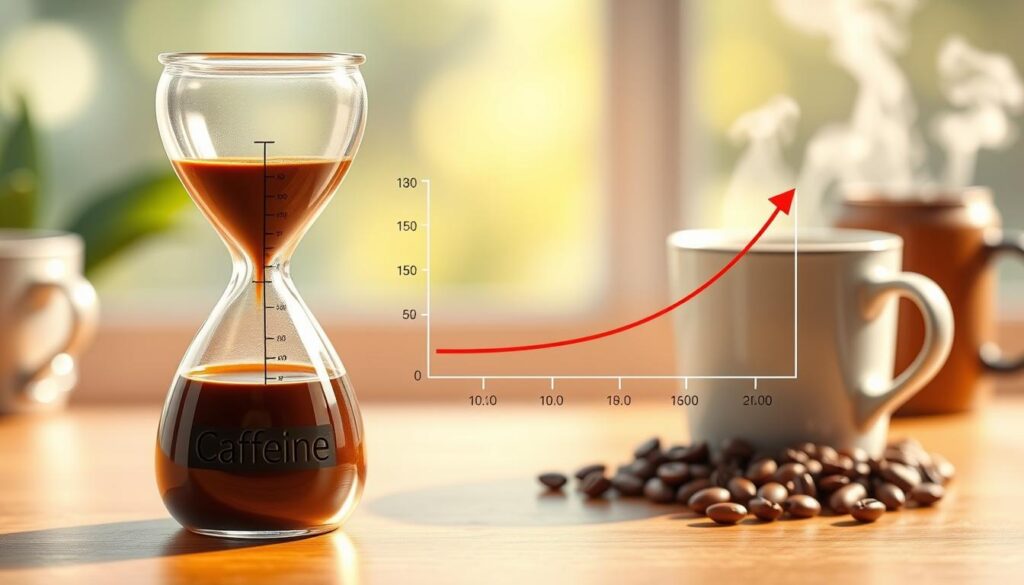
Use the half-life idea to turn a caffeine dose into a clear timeline. Half-life describes the time it takes for blood levels to drop by 50%.
A simple half-life example using milligrams
Start with the amount caffeine you consumed (in mg). Then halve that amount each half-life interval to estimate what remains.
- If you drink 100 mg, one half-life (~5 hours commonly) leaves about 50 mg.
- After the next half-life you have about 25 mg, then ~12.5 mg, and so on.
- Smaller remaining amounts can still affect sleep or anxiety in sensitive people.
Why half-life ranges widely from 2 to 12 hours
Half-life can fall between roughly 2 and 12 hours. Metabolism speed, age, hormones, medications, and liver health are key factors.
| Start (mg) | After 1 half-life | After 2 half-lives |
|---|---|---|
| 100 | ~50 | ~25 |
| 10 | ~5 | ~2.5 |
If sleep matters, assume a longer caffeine half-life until you test your response. Also check brew strength and serving content so your estimate matches the actual amount you drank.
What changes how long caffeine stays in your system</h2>
A mix of genes, hormones, and lifestyle choices shapes each person’s caffeine timeline. Many factors change how quickly the stimulant clears and how strong sensitive effects feel.
Genetics, age, weight, and sensitivity
Genes and age strongly alter metabolism. A person with fast metabolism will break down caffeine quicker than someone with slow metabolism.
Body weight plays some role, but sensitivity matters most. Two people can drink the same amount yet report very different sensitive effects.
Pregnancy, breastfeeding, and hormones
Hormonal shifts and oral contraceptives slow breakdown, so caffeine intake often lasts longer during pregnancy. Breastfeeding also requires caution because caffeine can pass into milk and affect infants.
Smoking, alcohol, altitude, and food
Smoking speeds clearance, while alcohol and high altitude can change absorption and effect timing. Eating before consumption slows uptake and may soften peak effects.
Health conditions and medications
Liver or kidney disease and some drugs can slow caffeine breakdown and raise sensitive effects. Common culprits include certain antibiotics, asthma medications, and heart drugs.
Takeaway
If any of these factors apply, assume a longer half-life and set an earlier caffeine curfew. Adjust routines so day productivity stays strong and sleep is protected.
How caffeine content changes the “hours it lasts”</h2>
Different drinks deliver very different caffeine loads, and that changes the clock on effects. Dose matters: higher caffeine content means more milligrams remain after each half-life and more hours before levels fall low.
Coffee, espresso, and decaf compared
An 8‑oz cup often holds about 95–165 mg of caffeine content, while a 1‑oz espresso shot typically has roughly 40–60 mg. That means a regular cup coffee can leave more caffeine circulating for hours than a single espresso shot.
Decaf is not zero. An 8‑oz decaf cup usually contains about 2–5 mg. For people who are very sensitive, even those small amounts can matter by bedtime.
Tea servings and steeping
Black tea generally contains about 25–50 mg per 8‑oz cup; green tea often runs 25–30 mg. Steep time, serving size, and the amount of tea leaves used can raise or lower those numbers.
Tea usually contains less stimulant per cup than a standard cup coffee, but multiple mugs or long steeps can add up.
Hidden sources: drinks, foods, and products
Soda ranges roughly 0–70 mg per 12‑oz can. Energy drinks vary widely, from about 50 up to 300 mg per serving. Hot cocoa has small amounts (3–13 mg), while dark chocolate and some medicines can add measurable stimulant.
Check labels and add totals. Plugging real milligram amounts into the half‑life example helps you personalize when levels will drop low enough for sleep.
| Item | Typical mg per serving | Note |
|---|---|---|
| 8‑oz cup coffee | 95–165 | Varies by beans and brew |
| 1‑oz espresso | 40–60 | Strong taste, less volume |
| 8‑oz decaf | 2–5 | Not caffeine‑free |
| Black tea (8‑oz) | 25–50 | Steep and leaves change content |
How to time your caffeine consumption so it doesn’t wreck your sleep</h2>

Timing stimulant intake protects sleep while keeping daytime energy. Follow a simple curfew and you can lower night wakings and improve next‑day alertness.
Why experts say stop 6–8 hours before bed
The American Academy of Sleep Medicine recommends avoiding caffeine at least 6 hours before bedtime; many experts extend that to 8 hours. Even if you no longer feel wired, the stimulant can still block adenosine and alter sleep physiology.
How caffeine reduces deep sleep and shifts rhythms
Caffeine can shorten deep sleep, make falling asleep harder, and shift the sleep‑wake cycle. That means lighter rest and groggy mornings despite fewer perceived symptoms.
Set a realistic caffeine curfew based on sensitivity
Start with an 8‑hour rule and test. If you still wake at night, move the curfew earlier. Cut total caffeine consumption and try lower‑mg drinks late afternoon.
| Typical bedtime | Last caffeine (8 hrs) | Last caffeine (6 hrs) | Practical swap |
|---|---|---|---|
| 10:00 PM | 2:00 PM | 4:00 PM | Switch to tea after noon |
| 11:00 PM | 3:00 PM | 5:00 PM | Half‑size later drinks |
| 9:00 PM | 1:00 PM | 3:00 PM | Decaf or herbal late |
Signs caffeine is still in your system (even if you don’t feel energized)
Some signals show stimulant presence even after the obvious boost fades. Watch for small changes that suggest caffeine continues to act on the body.
Jitters, anxiety, faster heartbeat, and more trips to the bathroom
Common signs include jittery hands, anxious thoughts, and a faster heart. You may also urinate more than usual due to fluid intake and a mild diuretic effect.
- Jitters or shaky hands
- Feeling unusually anxious or restless
- Faster heart rate or palpitations
- Increased urination after a drink
Trouble falling asleep or waking during the night
Even when you no longer feel energized, caffeine can make falling asleep harder and fragment sleep hours later. Sleep may feel lighter or less restorative.
To tell these signs apart from ordinary stress, track what you consumed and when. If patterns link symptoms to timing, treat that feedback by moving intake earlier or cutting total caffeine. Sensitive people often notice effects at lower doses or for longer periods, so adjust routines accordingly.
| Signal | When it may peak | Practical tip |
|---|---|---|
| Jitters / anxiety | 30–60 minutes | Skip late cups; try water or decaf |
| Faster heart | Within an hour | Relaxation breathing, note timing |
| Sleep disruption | Several hours later | Set an earlier curfew for intake |
Special situations: pregnancy, breastfeeding, teens, and high-risk health conditions</h2>
Some people need tailored rules for stimulant intake because of age, health, or caregiving duties. This section covers clear steps for breastfeeding, why youth are more vulnerable, and when to seek medical advice.
Breastfeeding and timing tactics
Caffeine transfers into breast milk and can reach peak levels about one hour after a drink. Guidance often limits intake to roughly two cups per day to keep infant fussiness or sleep trouble low.
Practical tactics: nurse right before a caffeinated drink, feed within the first hour after a cup, or wait about four hours to let levels fall in milk. Remember the half-life in milk is about four hours and infants may receive roughly 1% of maternal intake.
- Count total caffeine from all foods and products, not just beverages.
- Keep daily totals modest (around two cups of regular brew is a common rule).
- Time feeds to avoid peaks when possible.
Youth and high-risk conditions
Children and teens have smaller bodies and different sleep needs, so the same dose can hit harder and last longer. The American Academy of Pediatrics discourages routine use for minors because of sleep and behavior risks.
Talk to a clinician if you have anxiety, reflux or ulcers, heart rhythm problems, liver/kidney disease, seizures, or chronic sleep trouble. Bring details of typical caffeine intake, timing, and symptoms so the clinician can give practical, personalized advice.
| Group | Primary concern | Recommendation |
|---|---|---|
| Breastfeeding | Infant sleep/fussiness | Limit daily intake; time feeds around peak |
| Teens/children | Sleep disruption | Avoid routine consumption; prefer decaf or none |
| High-risk adults | Heart, reflux, anxiety | Consult clinician; review meds and symptoms |
Build a smarter coffee routine that supports steady energy</h2>
A small plan can cut jitters and keep energy consistent all day.
Choose a sensible amount per day (many adults safely use up to about 400 mg of caffeine). Count milligrams per cup or drink and set a personal cap that avoids peaks and crashes.
Keep intake early: aim for morning and early afternoon and set a firm curfew about 6–8 hours before bedtime. Avoid stacking cups that push stimulant levels into the night.
If you want to cut back, taper gradually to reduce withdrawal that can start within 12–24 hours and ease over roughly 48 hours. Try smaller servings, half‑caff, or tea as swaps.
Track consumption for one week: log each cup and the hour, note sleep quality, then adjust caps and timing. Target total mg, last‑caffeine time, and a non‑stimulant fallback for afternoon slumps.