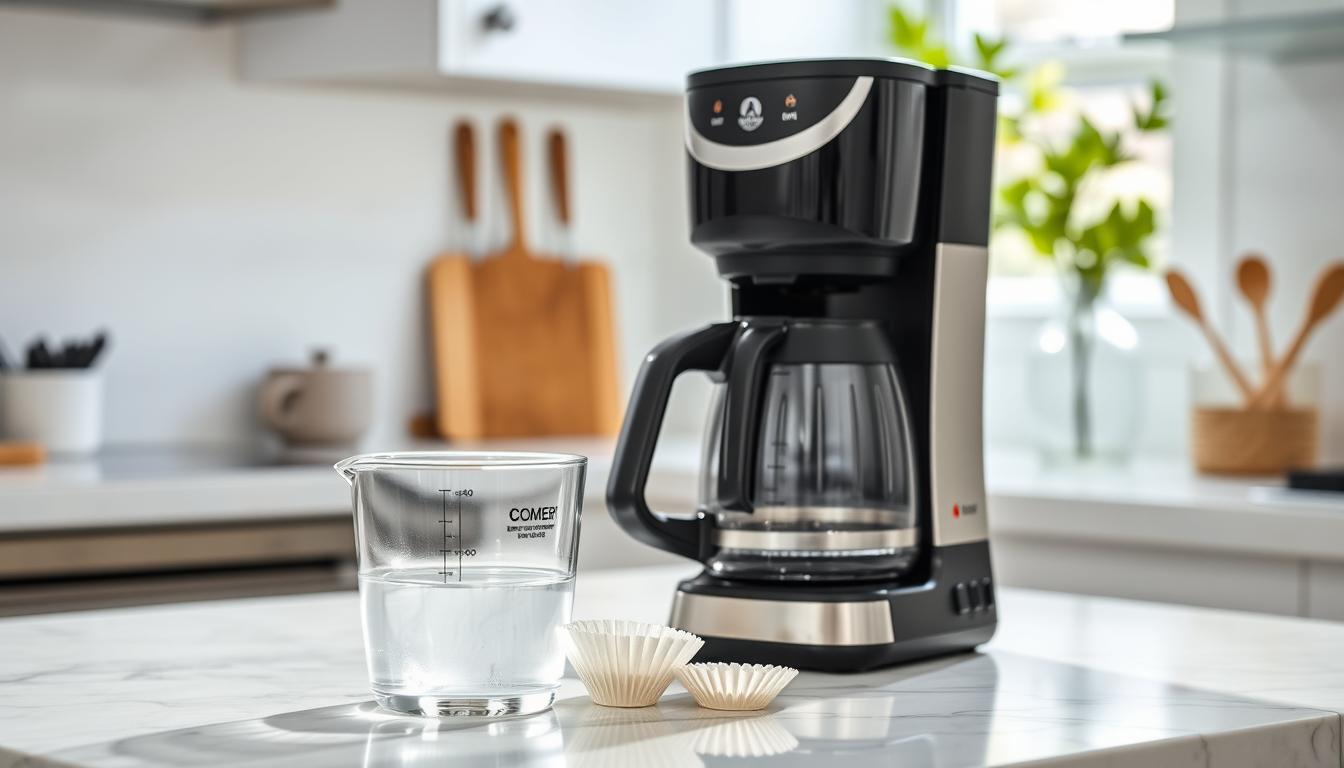
how to clean coffee maker with vinegar
The goal here is simple: remove mineral deposits that dull flavor and harm parts. Decalcifying restores taste and protects internal metal components. Use this guide for a safe, single-session deep cycle that most people can do in their kitchen.
You will follow a clear workflow: prep, mix a water and vinegar solution, run a brew cycle with pauses to soak, finish, rinse well, and wash removable parts. The steps suit a standard drip coffee maker and scale down for smaller reservoirs by keeping the same ratio.
Expect about an hour total, including at least a 20–30 minute sit time that helps dissolve buildup. Run the cycle with no grounds and rinse until no scent remains before brewing again.
Monthly deep cleaning — roughly every 30 uses — keeps performance steady and prolongs the machine’s life. This process cuts off flavors that build up and keeps morning cups tasting fresh.
Why cleaning and descaling your coffee maker matters for taste and performance
Scale and residue can quietly sap flavor and slow your morning brew. Over time, hard water leaves mineral buildup and calcium deposits inside hoses, the shower head, and the heating area. That scale narrows flow paths and alters extraction, which often yields flatter or bitter results.
Mineral scale and brewing problems
When deposits restrict the drip path, brew times stretch and the pot fills unevenly. You may notice less-hot water, odd noises, or inconsistent cup temperatures. Descaling restores steady flow and helps the machine hit the right temperature more reliably.
Hygiene and stale flavors
Warm, moist brewers invite yeast and mold. Studies show many units harbor microbes that can tint aroma and irritate sensitive users. Regular removal of old oils and residues keeps each cup coffee tasting fresh and reduces off notes.
- Hard water and calcium create scale that affects flow and extraction.
- Slow dripping, longer brew time, and lower temperature are common symptoms.
- Descaling improves flavor, speed, and temperature stability.
Because water hardness and use vary, every coffee maker needs a schedule that matches real conditions. A mild acid solution dissolves mineral deposits without specialty products, making it a practical kitchen approach.
What you’ll need in your kitchen before you start
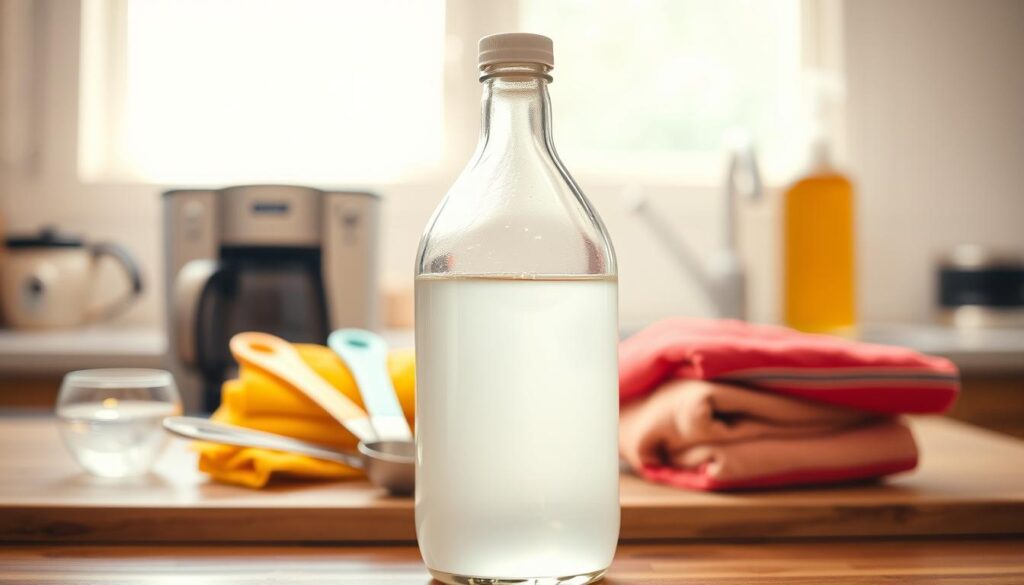
A short prep step saves time and keeps the rinse cycles effective—get these supplies ready.
Gather distilled white vinegar for dissolving scale, fresh water for rinsing, and a paper filter basket or single paper filter to trap loose particles during the cycle.
- White vinegar — dissolves mineral buildup inside the water reservoir and lines.
- Fresh water — plain tap water is fine; use distilled if you want to reduce future mineral deposits.
- Paper filter or paper filter basket — catches loosened grit so the carafe stays clean.
- Coffee pot (carafe), lid, filter basket, and any removable parts — these get washed after descaling.
- Dish soap and a soft brush — remove oily film without scratching glass or plastic parts.
Quick prep checklist: empty old coffee grounds, remove used filter, and set a new paper filter in the basket. Have enough water on hand to run at least one full rinse cycle, and plan for a second if a vinegar scent lingers.
If your machine has a built-in clean cycle or a pause-and-serve feature, follow the same basics while using those settings for convenience.
For extra reading on safe descaling and handy tips, see this brief guide: decalcifying tips.
How to clean coffee maker with vinegar using a simple brew cycle
A short soak during a paused brew makes a big difference for mineral deposits. Follow the steps below for a quick, kitchen-friendly process that works for most drip coffee makers.
Prep and safety
Remove coffee grounds, toss the old filter, and rinse the basket quickly. Place the empty carafe on the warming plate.
If your unit includes a built-in grinder, switch it off so it does not run dry during the cycle.
Mixing and filling the reservoir
Use one of two mixing options: equal parts vinegar and water for routine descaling, or a 1/3 vinegar plus 2/3 water ratio for large reservoirs. For a 12-cup reservoir, fill to the 4-cup mark with vinegar, then top with water.
Fill water reservoir using the machine’s measurement marks so the solution reaches internal lines and the shower head.
Run, pause, finish, and rinse
Start a normal brew cycle and let it run about halfway. Turn the machine off and let the solution sit for roughly 30 minutes (up to 60 minutes for heavier scale).
Restart and finish the cycle, discard the hot liquid, then refill the reservoir with fresh water and run a full water-only cycle. Repeat one more rinse if any sharp odor remains.
| Mix Option | Example Fill (12-cup) | Sit Time | Rinse Cycles |
|---|---|---|---|
| 1:1 vinegar:water | 6 cups vinegar + 6 cups water | 30 minutes | 2 cycles |
| 1/3 vinegar + 2/3 water | 4 cups vinegar + 8 cups water | 30–60 minutes | 2 cycles (add more if needed) |
| Light maintenance | Small reservoir: scale down proportionally | 30 minutes | 1–2 cycles |
Rinsed enough cues: the outgoing water smells neutral, the first plain pot tastes like hot water (not sharp), and no vinegar odor appears when you open the lid. This process restores steady dripping and better cup coffee by removing mineral buildup inside coffee maker parts.
Cleaning the coffee pot, filter basket, and exterior after descaling
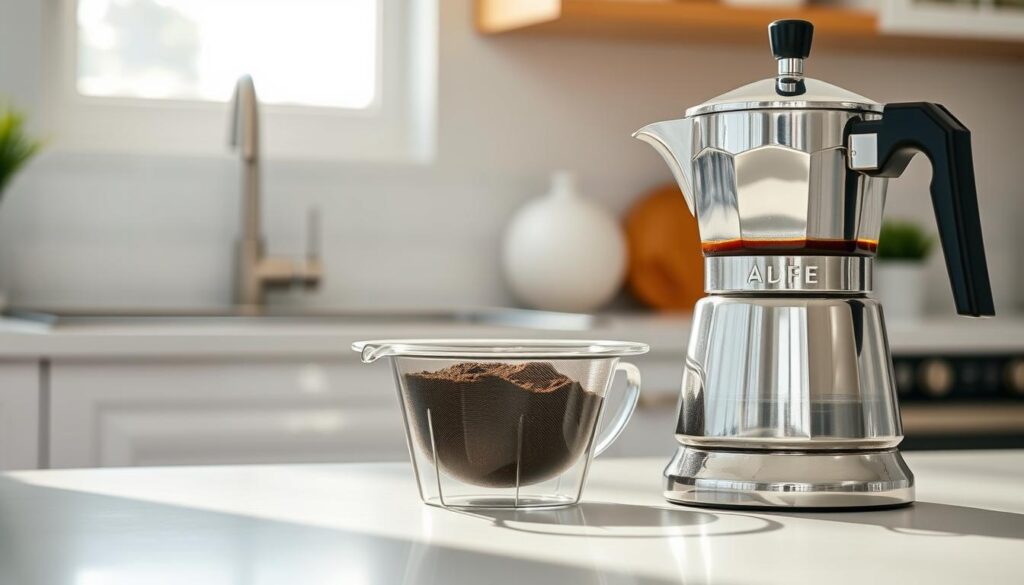
A quick follow-up wash restores the parts you touch every day and keeps flavor bright.
Wash the carafe and lid with hot water and dish soap
Remove the coffee pot and lid and rinse any loose grounds. Fill the sink with hot water and a few drops of dish soap.
Gently scrub the carafe and lid to remove oily film that can make clean coffee taste stale. Rinse well so no soap film remains.
Clean the filter and filter basket thoroughly
Take out the filter and the filter basket. Use a soft brush to reach corners and the underside where grounds and oils hide.
Rinse both parts under running water. If the model allows, place removable parts in the dishwasher only when the manufacturer says they are dishwasher-safe.
Wipe the base and warming plate
Unplug the coffee maker before wiping. Use a damp cloth to remove drips, stains, and sticky buildup on the base, buttons, and warming plate.
Dry surfaces with a clean cloth and let all parts air-dry fully before reassembly. This small step reduces moisture that can cause odor or mold.
- Transition from internal descaling to surface care for daily flavor.
- Wash carafe and lid with hot water and dish soap; rinse thoroughly.
- Clean filter basket and filter; check corners and underside.
- Wipe base and warming plate; let parts air-dry before reassembly.
How often to deep clean your coffee machine and what to do between descalings
A simple schedule keeps your machine reliable and your morning cup consistent.
Monthly deep clean and the 30‑use rule
Most brands suggest a deep clean about every 30 uses, roughly once a month for daily drinkers. Adjust this if you have hard water; calcium and mineral buildup speed up in that case.
Quick daily habits that keep each cup fresh
Empty spent grounds right away. Rinse the filter basket and wash the coffee pot and lid with hot water and dish soap. Let removable parts air dry fully before reassembly.
Alternatives and when to repeat a rinse
If you avoid vinegar, try lemon juice as an acidic descaler. For mild deodorizing, run warm water mixed with 1/4 cup baking soda through the reservoir and follow with plain water cycles.
- Repeat a water-only cycle if any odor lingers after descaling.
- Run an extra rinse when white flakes or slow dripping persist.
- Consider a commercial descaler for stubborn deposits after two attempts.
| Timing | Action | Decision cue |
|---|---|---|
| Monthly | Deep clean / descaling cycle | ~30 uses or visible scale |
| Daily | Rinse basket, wash pot | Any grounds left, oily film |
| As needed | Lemon juice or baking soda flush | Vinegar odor, stubborn buildup |
Keep your coffee maker running like new with a simple monthly reminder
Set a monthly reminder and your coffee maker will repay you with steadier cups and fewer surprises.
Keep the repeat routine simple: fill the reservoir with a vinegar and water mix, run a brew and pause for a short soak, then complete the run and follow with one or two fresh-water rinse cycles until the scent is gone.
Why bother? Regular upkeep keeps taste bright, stops slow-drip symptoms, and helps the machine reach proper brew temperature reliably.
Pick an easy trigger — first of the month, after 30 uses, when you change a water filter, or when brew time lengthens — and do a quick quality check: neutral smell, clear rinse water, no visible residue, and a clean coffee pot and basket.